Apparel Manufacturing Blog & Insights
Guides, industry trends, tech pack tips, and custom streetwear manufacturing advice.
Top Custom Denim Jeans Manufacturers for Global Buyers
Table of Contents
- Denim Jeans Market Outlook: $86.66 Billion in 2022, with 5.8% Forecast CAGR
- How Custom Jeans Are Made: Fabric Selection, Sampling, Sewing, and Finishing
- Manufacturer Profiles: Global Custom Denim Suppliers and Their Specialties
- Buyer Benchmarks: MOQ, Lead Time, Production Capacity, and Quality Tests
- Environmental Benchmark: Levi’s LCA Reports 3,781 Liters of Water per Pair
- FAQS
- Conclusion
- Related Posts
A strong Custom Denim Jeans supplier does more than sew a clean seam. It turns a buyer’s fit, fabric, and finish requirements into repeatable production. That takes clear specifications and careful sampling. A few millimeters can change how a waistband sits; an uneven wash can make two supposedly matching pairs look unrelated.
Fashion designer Yves Saint Laurent once said, “I wish I had invented blue jeans.” His remark captures denim’s lasting appeal, but global buyers face practical questions behind that appeal. Can a factory hold consistent measurements across sizes? Does it explain minimum order quantities, sampling costs, and production timelines clearly? Can its team document fabric choices and confirm wash details before bulk production? These checks matter more than a polished catalog. Small details count.
This guide introduces manufacturers serving different buyer needs, from emerging labels seeking flexible development to established brands planning larger runs. It considers product range, customization options, communication, production capability, and the evidence buyers should request before placing an order. No supplier is perfect. A factory may offer excellent washes yet have limited capacity for complex fits; another may communicate well but need closer sample review. Buyers should compare claims with samples, written specifications, and direct discussions. The right partner is not simply the one with the lowest quote. It is the one whose process, quality controls, and capabilities fit the product—and whose limitations are made clear early.
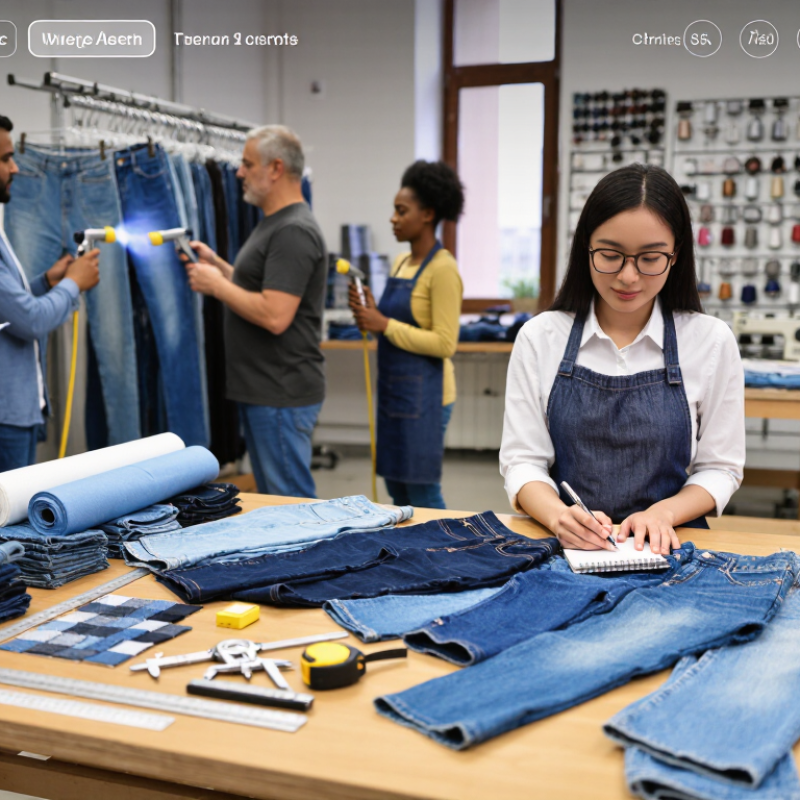
Denim Jeans Market Outlook: $86.66 Billion in 2022, with 5.8% Forecast CAGR
The denim jeans market was valued at $86.66 billion in 2022, with a forecast compound annual growth rate of 5.8%. This suggests sustained commercial opportunity for global buyers and custom manufacturers. Forecasts are not guarantees. Results can differ by region, product segment, and the period measured, so buyers should treat the figures as context rather than a purchasing plan.
Growth creates practical questions for sourcing teams. Can a manufacturer keep the same fit across several sizes? Do wash samples match the approved shade under different lighting? A clear specification should cover fabric weight, shrinkage, stitching, trims, and measurement tolerances. These details help buyers compare quotations beyond the unit price. They also make sample reviews more useful.
A strong supplier relationship depends on repeatable production, transparent lead times, and early communication when fabric or fit changes arise. Ask for pre-production samples and written inspection criteria before confirming an order. Small inconsistencies matter. A slightly different inseam can affect returns, while uneven fading may weaken a coordinated collection. Market growth is encouraging, but forecasting demand remains imperfect; careful testing and realistic order quantities still matter.
How Custom Jeans Are Made: Fabric Selection, Sampling, Sewing, and Finishing
Custom jeans start with fabric decisions that affect fit, comfort, and durability. Compare denim weight, fiber content, and stretch recovery against the intended cut. A rigid fabric may suit a structured straight leg, while a stretch blend can ease movement in a closer fit. Check the fabric under daylight; shade differences between rolls can show up later. Wash a swatch before cutting, since shrinkage changes measurements. Then create a sample using the planned pattern and wash. A first sample can still miss the mark. That is useful feedback, not wasted work.
During sewing, makers check seam alignment, stitch density, pocket placement, and waistband balance. Reinforce high-stress points, such as pocket corners and belt loops, without making seams bulky. Finishing may include washing, softening, or abrasion, depending on the desired appearance. Record settings and measurements for each approved sample. Small changes in wash temperature or abrasion can alter color and hand feel, so inspect several garments from a trial run rather than relying on one perfect piece.
Tips: Ask for a fabric swatch and a washed sample before approving bulk production. Measure key points yourself, including the waist, rise, inseam, and leg opening. Keep notes on fit comments; vague feedback like “a little tight” is hard to act on. Allow time for another sample if the first needs revision.
Manufacturer Profiles: Global Custom Denim Suppliers and Their Specialties
Custom denim suppliers often differ more in process than in location. An integrated manufacturer can manage fabric sourcing, pattern development, washing, and sewing under one roof. This setup helps teams track shrinkage and shade changes across samples. Ask for a wash swatch and a measured sample before approving bulk production. Small details matter.
Small-batch specialists suit emerging labels that need limited runs or frequent fit revisions. Their strengths may include hand-finished hems, varied pocket placements, and flexible grading. Capacity can be tighter, though, and lead times may shift when several sample rounds are needed. Request the factory’s size chart, stitching specifications, and defect policy in writing. Paperwork helps.
Suppliers with strong laundry capabilities can develop faded, softened, or clean-rinsed finishes. Review physical swatches under daylight; screens hide undertones. A reliable partner should explain fabric weight, fiber content, expected shrinkage, and production tolerances in plain language. Some profiles look impressive on paper, but sample consistency is the harder test. It deserves a second look.
Buyer Benchmarks: MOQ, Lead Time, Production Capacity, and Quality Tests
For global denim buyers, a supplier’s minimum order quantity matters only when it fits the launch plan. Ask whether the MOQ applies per style, wash, or color. A 500-piece order may sound manageable, yet splitting it across several washes can raise the actual minimum. Lead times also need a clear starting point: fabric approval, sample sign-off, or deposit receipt. These dates are not interchangeable. Request a written production schedule with sample, cutting, sewing, washing, and inspection milestones.
Capacity figures deserve careful checking. Monthly output may include other buyers’ orders, so ask how many lines can be assigned to yours. Confirm whether washing and finishing happen in-house or through partners. That detail can affect timing. Quality checks should cover fabric weight, shade consistency, stitching, measurements, and hardware function. Ask for tolerances and inspection records, not just a general promise. A small measurement drift can change the fit across a full size run. No checklist prevents every defect; that is worth admitting.
Tips: Request a pre-production sample and a shipment sample, then compare both against your approved reference. Agree on a defect-sampling method before production starts. Keep one signed sample and record its measurements, wash, and color under neutral light. Leave schedule buffer for revisions. Even experienced teams sometimes miss a detail. Review the results before placing repeat orders.
Environmental Benchmark: Levi’s LCA Reports 3,781 Liters of Water per Pair
A 2015 denim life-cycle assessment, The Life Cycle of a Jean, estimates 3,781 liters of water for one pair. Its boundary includes cotton growing, fabric and garment production, consumer care, and disposal; it is not a factory-only reading. That distinction matters. Irrigation, dyeing, and home laundering affect the total differently across regions and product designs. A mill reusing process water may still source cotton from a water-stressed basin.
For global buyers, the figure is a warning, not a universal scorecard. UNEP’s 2023 Sustainability and Circularity in the Textile Value Chain report estimates textiles generate 2–8% of global greenhouse-gas emissions; water impacts also vary sharply by location. Ask suppliers to disclose water use per finished pair, measurement boundaries, sourcing basins, and wastewater reuse rates. Verify figures against meter records and independent audits. Compare like with like: fabric weight, stretch content, wash effects, and laundering assumptions can shift results. Small details count. Abrasion finishes may require extra wet processing, while minimally washed designs may reduce steps—but suppliers need to verify the claim. Perfect accounting is rare. Flag unexplained gaps and revisit targets each season.
Top Custom Denim Jeans Manufacturers for Global Buyers - Environmental Benchmark: 3,781 Liters of Water per Pair
| Environmental data point | Benchmark | How to interpret it |
|---|---|---|
| Reported water use | 3,781 liters per pair | A reported lifecycle-assessment benchmark; it should not be treated as a universal value for all denim jeans. |
| Approximate US-gallon equivalent | 999 US gallons per pair | Converted from 3,781 liters using 1 US gallon ≈ 3.785 liters; rounded to the nearest gallon. |
| Functional unit | One pair of jeans | The figure is expressed per garment pair, not per kilogram of fabric or per year of use. |
| Assessment boundary and assumptions | Not specified in this benchmark summary | Results can vary with the study’s system boundary, materials, production locations, consumer care, and end-of-life assumptions. |
| Energy use and greenhouse-gas emissions | No figures provided here | These are separate environmental indicators and cannot be inferred from the water-use figure alone. |
| Buyer comparison guidance | Compare like with like | Check that suppliers use comparable product specifications, lifecycle boundaries, and reporting methods before comparing results. |
FAQS
Rigid denim can hold a structured shape, while stretch blends may feel easier to move in. Check weight, fiber content, and stretch recovery against the intended cut.
Washing can reveal shrinkage and color changes before they affect the pattern. Check the swatch in daylight, too. Roll shades can differ.
It shows how the planned pattern, fabric, and wash work together. A first sample can miss the mark. That is useful feedback.
Measure the waist, rise, inseam, and leg opening. Compare them with your intended fit, and write down specific concerns rather than saying only “a little tight.”
Check seam alignment, stitch density, pocket placement, and waistband balance. Reinforce pocket corners and belt loops without making the seams bulky.
Washing, softening, and abrasion can alter color and hand feel. Even small changes in temperature or abrasion may affect the result. Not perfect.
A 2015 life-cycle assessment estimated 3,781 liters per pair. That figure covers cotton growing, production, consumer care, and disposal—not factory work alone.
Ask for water use per finished pair, measurement boundaries, sourcing locations, and wastewater reuse rates. Compare similar fabrics and washes, then check figures against meter records or independent audits. Gaps happen.
It may reduce some processing steps, but suppliers need to verify the claim. Water impacts vary by location, and perfect accounting is rare. Revisit the numbers each season.
Conclusion
Custom Denim Jeans continue to attract global buyers as the denim market grows, with a reported value of $86.66 billion in 2022 and a forecast compound annual growth rate of 5.8%. Choosing a manufacturing partner involves more than comparing prices. Buyers should consider each supplier’s strengths, such as fabric development, wash options, customization, and ability to support different order sizes. The production journey typically begins with selecting denim fabric, followed by sample development and approval, cutting and sewing, and finishing steps such as washing, inspection, and packing.
Before placing an order, compare minimum order quantities, lead times, production capacity, and quality-control procedures. Ask how measurements, color consistency, stitching, and durability are checked, and confirm how samples are approved before bulk production. Environmental impact is another useful benchmark: one lifecycle assessment has reported approximately 3,781 liters of water used per pair of jeans. Buyers can use figures like this to ask suppliers about water use, material choices, and practical steps to reduce resource consumption while maintaining consistent product quality.

Blog Tags: