Apparel Manufacturing Blog & Insights
Guides, industry trends, tech pack tips, and custom streetwear manufacturing advice.
Choosing the right Custom Jogger Pants manufacturer involves more than comparing catalog photos and quoted prices. Global buyers need consistent quality, transparent communication, and dependable production capacity. This guide introduces ten manufacturers serving international apparel brands, retailers, and private-label businesses.
The evaluation considers fabric options, pattern development, sampling, minimum order quantities, and bulk-production controls. Details matter. A jogger can feel excellent in a sample but change after washing. Important checks include fabric weight, shrinkage, colorfastness, waistband recovery, and stitching strength. Buyers should also review size grading, packaging methods, inspection procedures, and delivery performance.
Experience matters here.
Reliable manufacturers usually explain their process clearly. They can discuss cotton blends, recycled polyester, fleece interiors, brushed finishes, and seasonal fabric adjustments. They should also provide realistic timelines instead of promising everything immediately. Certifications, factory audits, and documented quality procedures can strengthen buyer confidence, but paperwork alone cannot replace physical samples. Product testing remains essential.
This selection is designed to support practical supplier comparison. It does not suggest that one factory suits every order. A startup may value low minimums and flexible sampling, while an established retailer may require automated production and stable monthly capacity. Some manufacturers may communicate well but offer limited customization. Others may produce excellent garments yet need stronger logistics support. That trade-off deserves attention.
The final decision should reflect your target market, budget, design complexity, and risk tolerance. Ask precise questions, request representative samples, and verify production claims before signing an agreement. A careful supplier relationship can improve fit, reduce rework, and protect your brand’s reputation. Mistakes still happen. Good manufacturers respond quickly, explain causes, and correct them with measurable action.
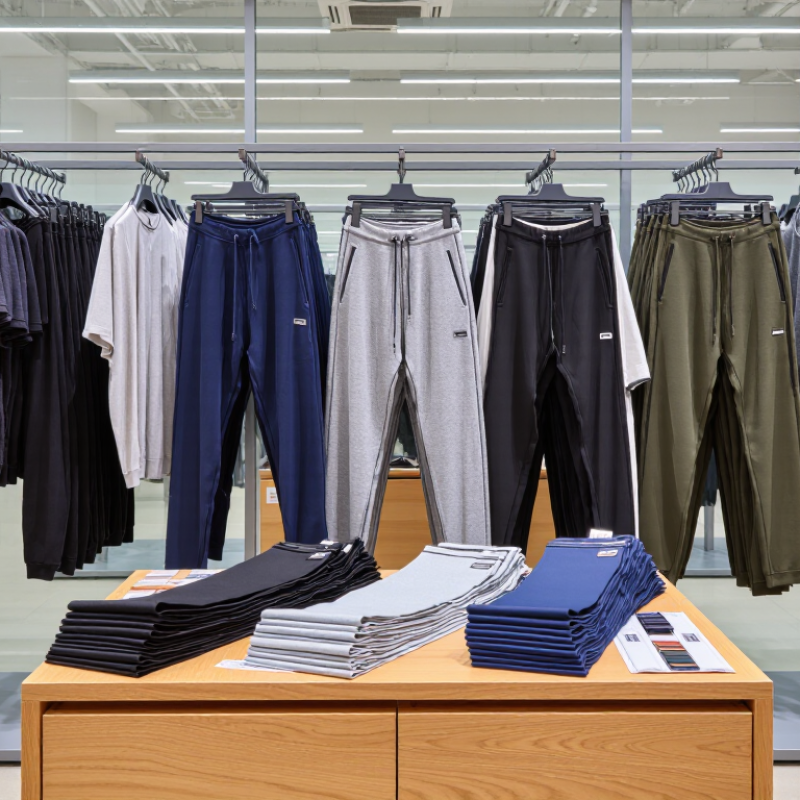
What Defines a Reliable Custom Jogger Pants Manufacturer
For global buyers comparing the top 10 custom jogger pants manufacturers, reliability starts with production evidence, not polished promises. An experienced manufacturer should explain fabric weight, fiber content, shrinkage control, and colorfastness in clear terms. They should also provide recent samples with measured specifications. Samples reveal problems. A waistband that twists after washing can expose weak pattern control.
A dependable factory uses documented quality checkpoints from cutting to final packing. Ask how operators inspect stitching density, pocket alignment, drawcord length, and seam strength. Request a pre-production sample before bulk manufacturing begins. Technical staff should discuss grading across sizes, not only show one attractive sample. They should understand how fleece, cotton blends, and recycled fibers behave during sewing and laundering. Details matter.
Communication is another practical test. Reliable teams confirm artwork files, measurement charts, delivery dates, and acceptable tolerances in writing. They should report delays early, even when the explanation is uncomfortable. Buyers can also request factory photographs, audit records, and references from comparable orders. These documents do not guarantee perfect performance. I have seen careful suppliers miss small labeling details, while rushed teams hide larger issues. That is why a realistic correction process matters as much as first-pass quality. A manufacturer worth trusting welcomes inspections and records every approved change.
| Rank | Anonymous Manufacturer Profile | Primary Production Region | Typical MOQ | Sample Lead Time | Bulk Lead Time | Common Fabric Options | Customization Capability | Quality-Control Evidence | Compliance Documents to Request | Export Readiness | Reliability Score |
|---|---|---|---|---|---|---|---|---|---|---|---|
| 1 | Profile A — Full-Service Cut-and-Sew Specialist | East and Southeast Asia | 300–500 units per style | 7–12 days | 30–45 days | Fleece, French terry, cotton jersey, recycled polyester blends | Patterns, labels, drawcords, pockets, embroidery, screen printing, packaging | Pre-production and final inspection reports available | Factory audit, material test report, social-compliance audit, transaction certificate where applicable | Experienced with cartons, size assortments, and commercial invoices | 9.2/10 |
| 2 | Profile B — Low-MOQ Fashion Production Unit | South Asia | 150–300 units per style | 8–14 days | 35–50 days | Cotton fleece, viscose blends, organic cotton, elastane jersey | Small-batch sampling, custom fits, wash effects, woven labels, hangtags | Inline inspection and measurement tolerance records | Fiber-content testing, colorfastness report, factory registration, ethical-trade documentation | Suitable for smaller international orders and mixed-size shipments | 8.9/10 |
| 3 | Profile C — Performance Jogger Manufacturer | East Asia | 500–800 units per style | 10–15 days | 35–55 days | Polyester-spandex, nylon-spandex, moisture-wicking jersey, brushed technical fleece | Reflective trims, zip pockets, bonded seams, silicone logos, functional panels | Fabric performance testing and production-line checkpoints | Moisture-management test, abrasion test, colorfastness report, restricted-substance test | Strong capability for technical specifications and repeat programs | 8.8/10 |
| 4 | Profile D — Sustainable Apparel Factory | South and Southeast Asia | 400–700 units per style | 10–16 days | 40–60 days | Organic cotton, recycled polyester, recycled cotton, low-impact dyed fleece | Custom fabric sourcing, recycled trims, printed care labels, sustainable packaging | Traceability records and documented material approvals | Organic or recycled-content certification, chemical-management policy, wastewater records | Good fit for buyers with sustainability reporting requirements | 8.7/10 |
| 5 | Profile E — Private-Label Essentials Producer | China and Southeast Asia | 500–1,000 units per style | 7–14 days | 30–45 days | Cotton-polyester fleece, French terry, cotton jersey, rib-knit blends | Private labels, standard fit adjustments, logo application, color matching | AQL-based inspection process and approved sample control | Pre-shipment inspection, care-label review, fiber composition test, packing-list verification | Efficient for repeat orders and core color programs | 8.6/10 |
| 6 | Profile F — Premium Small-Batch Studio | Europe and the Mediterranean | 100–250 units per style | 10–18 days | 35–60 days | Combed cotton, heavyweight French terry, merino blends, premium fleece | Complex pattern development, premium trims, garment dyeing, embroidery, hand finishing | Detailed workmanship inspection and approved-size-set control | Origin documentation, fiber test, REACH-related chemical compliance, workplace records | Strong for premium collections and limited releases | 8.5/10 |
| 7 | Profile G — High-Volume Basics Manufacturer | South and Southeast Asia | 1,000–3,000 units per style | 10–15 days | 35–50 days | Poly-cotton fleece, cotton jersey, French terry, recycled polyester blends | Standardized fits, bulk color programs, screen printing, embroidery, retail packaging | Inline inspection, needle control, metal detection, final audit | Factory audit, product-safety test, packing inspection, social-compliance documentation | Well suited to large purchase orders and scheduled replenishment | 8.4/10 |
| 8 | Profile H — Made-to-Order Customization Workshop | East Asia | 200–500 units per style | 8–14 days | 30–50 days | French terry, fleece, nylon blends, cotton-spandex jersey | Custom block development, paneling, contrast colors, appliqué, custom packaging | Digital tech-pack review and final measurement inspection | Material declarations, colorfastness test, size-set approval, packaging compliance | Responsive for design-led collections and frequent style changes | 8.3/10 |
| 9 | Profile I — Sportswear and Athleisure Producer | East and Southeast Asia | 600–1,200 units per style | 10–16 days | 40–55 days | Polyester-spandex, nylon-spandex, interlock, breathable mesh, brushed jersey | Compression panels, ergonomic seams, zip pockets, heat-transfer graphics, reflective details | Fit testing, seam-strength checks, fabric performance testing | Colorfastness, pilling, abrasion, restricted-substance, and dimensional-stability reports | Suitable for activewear distribution and international e-commerce fulfillment | 8.2/10 |
| 10 | Profile J — Flexible Multi-Category Garment Factory | South Asia and Southeast Asia | 300–800 units per style | 12–18 days | 40–60 days | Cotton fleece, French terry, polyester blends, recycled fibers, rib fabrics | Jogger sets, hoodies, sweatshirts, custom labels, printing, embroidery, retail-ready packing | Pre-production sample approval and final random inspection | Factory audit, fiber-content test, social-compliance records, shipment inspection | Useful for brands ordering coordinated apparel collections | 8.1/10 |
FAQS
Request composition, GSM, stretch percentage, shrinkage, pilling, and colorfastness results. Ask for physical swatches. Photos can hide texture differences.
Review waist, rise, thigh, inseam, and cuff measurements. Check graded samples across several sizes. A two-centimeter rise error can change the silhouette noticeably.
Wash the sample and test it during movement. Check pocket flatness, drawcord security, waistband recovery, and seam cleanliness. Small flaws matter.
Keep approved measurements, tolerances, colors, and construction details in one technical file. This reduces confusion across time zones. I might still overlook one measurement.
Ask about custom colors, woven labels, embroidery, printed artwork, and packaging. Confirm extra costs separately. Not every option suits every fabric.
Compare trial-order performance with larger seasonal capacity. Request realistic minimum quantities and production timelines. A factory may manage samples well but struggle with volume.
Ask for inspection procedures, approval points, written tolerances, and correction responsibilities. Request random checks before shipment. Bulk garments can still show shade or measurement differences.
Not always. A lower price may reflect weaker stitching, unstable sizing, or limited testing. A slightly higher price may support better fabric control and safer packing. Still, higher cost does not guarantee perfection.
Conclusion
This guide explains what global buyers should look for in reliable Custom Jogger Pants manufacturers. It focuses on essential qualities such as consistent production standards, clear communication, dependable lead times, transparent pricing, and strong quality-control procedures. Buyers will also learn how to evaluate fabric performance, garment fit, sizing accuracy, stitching, color consistency, and the manufacturer’s ability to support custom designs, labels, packaging, and special finishing requirements.
The article also presents practical criteria for comparing international jogger pants suppliers, including minimum order quantities, sampling services, production capacity, customization flexibility, shipping coordination, and after-sales support. Rather than choosing based on price alone, brands should assess which manufacturer best matches their target market, product positioning, quality expectations, order volume, and long-term development plans. A careful comparison of capabilities and communication can help buyers select a dependable production partner and build a stable supply chain for future collections.