Apparel Manufacturing Blog & Insights
Guides, industry trends, tech pack tips, and custom streetwear manufacturing advice.
2026 Top Custom Graphic T Shirt Suppliers for Bulk Buyers
Table of Contents
- Define Custom Graphic T-Shirt Suppliers and Their Bulk-Order Role
- Compare 180–240 GSM Fabrics for Weight, Fit, and Durability
- Assess Print Methods Through ISO 105-C06 Wash-Fastness Testing
- Verify Factory Quality Using ISO 2859-1 AQL Sampling Plans
- Evaluate MOQ, Lead Time, and Cost Before Placing a 2026 Bulk Order
- FAQS
- Conclusion
- Related Posts
For bulk buyers, choosing a supplier is more than comparing the price per shirt. Print consistency, fabric weight, sizing, lead times, and reorder reliability all affect the finished order. Small differences matter: a slightly uneven chest print can stand out across hundreds of garments.
Demand is growing. Grand View Research valued the global custom T-shirt printing market at $5.16 billion in 2024 and projects it could reach $9.82 billion by 2030. Its report forecasts an 11.5% compound annual growth rate from 2025 to 2030. These figures indicate opportunity, not a guarantee of sales or supplier performance. McKinsey’s State of Fashion 2025 also describes an industry facing cautious growth and ongoing cost pressures. Buyers should therefore assess supplier claims against samples, production details, and clear written quotes.
This guide to the 2026 Top Custom Graphic T Shirt Suppliers for Bulk Buyers focuses on practical evidence. It considers print methods, garment options, minimum order quantities, sample policies, production capacity, and shipping communication. Custom Graphic T-Shirts can look compelling on a product page, yet colors may shift between a digital mock-up and a printed sample. That happens. A test order may reveal issues a polished catalog cannot. No supplier is ideal for every brief, and published specifications can leave questions unanswered. The comparisons ahead are intended to help buyers ask better questions, verify fit for their order, and choose with fewer surprises.
Define Custom Graphic T-Shirt Suppliers and Their Bulk-Order Role
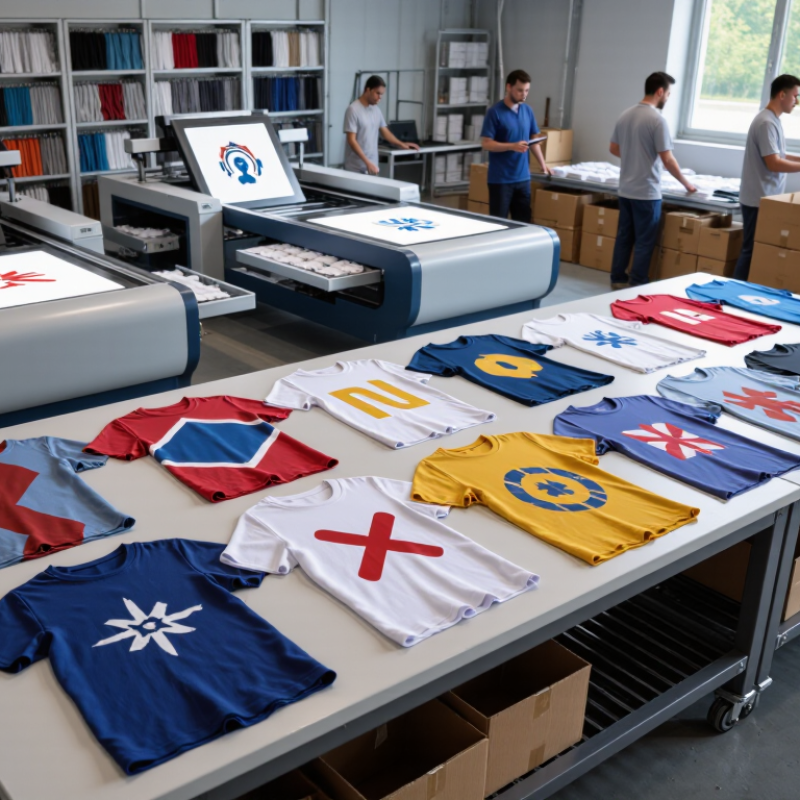
Custom graphic T-shirt suppliers are production partners that make shirts with artwork or designs specified by a buyer. They may source blank garments, print graphics, add labels, and pack finished orders. Their role is broader than printing. For bulk buyers, they coordinate materials, production schedules, quality checks, and shipment details across many pieces.
A buyer usually shares artwork, garment sizes, color choices, and a target quantity. The supplier can then confirm print methods, pricing, and a sample for review. Bulk production may lower the cost per shirt, but it also increases the impact of small errors. A misplaced graphic or inconsistent ink color can affect hundreds of garments. Check the sample under ordinary lighting, and confirm measurements before approving the full run.
Clear communication matters. Ask how the supplier handles size variations, damaged pieces, and schedule changes. Request written specifications, including fabric weight, print location, and acceptable color differences. These details make comparisons between suppliers more useful. Bulk planning is rarely perfect. A sample can look excellent, yet feel different after washing; testing one is sensible, though it adds time. Suppliers do not all offer the same level of design support, so buyers should match the service to the project rather than assume every detail is included.
Compare 180–240 GSM Fabrics for Weight, Fit, and Durability
For bulk graphic tees, GSM helps buyers compare fabric weight, but it does not tell the whole story. Around 180 GSM, cotton jersey often feels light and flexible, making it comfortable in warm conditions. It can also show more through under bright light, depending on color and yarn. At 200–220 GSM, a tee usually feels more substantial and holds its shape better during wear. For a boxier fit, that extra body can help the print sit smoothly. Not always, though. Knit structure and finishing matter, too.
At 240 GSM, fabric feels noticeably heavier and may suit oversized cuts or cooler weather. But heavier does not automatically mean more durable. Poor stitching or rough laundering can still shorten a shirt’s life. Ask suppliers for fabric composition, measurement tolerances, and care-test details, then order samples in the actual colors and sizes you plan to buy. Feel the seams. Check the collar after washing. A simple wash test can reveal twisting or shrinkage that a swatch cannot. I would compare samples side by side, while noting that one test may not predict every production batch. For a large order, agree on the target GSM range and inspect finished garments before approving bulk production.
Assess Print Methods Through ISO 105-C06 Wash-Fastness Testing
2026 Top Custom Graphic T Shirt Suppliers for Bulk Buyers
Assess Print Methods Through ISO 105-C06 Wash-Fastness Testing
For bulk orders, a vivid sample is not enough. Ask suppliers to test finished shirts using ISO 105-C06, which evaluates color fastness during domestic or commercial laundering. The test measures color change on the garment and staining on adjacent fabric. Results depend on the selected procedure, including wash conditions and detergent, so compare reports only when their settings match. Screen printing, direct-to-garment printing, and transfers can perform differently across inks, fabrics, and curing conditions. The print method alone does not predict the result.
Tips: Request a report for the same fabric, print, and curing setup as your order. Check the wash procedure, temperature, and gray-scale ratings for color change and staining. Keep a tested sample for comparison.
Look closely at fine lines and large solid areas after washing; fading may appear uneven. Ask how many cycles the report covers, since a single test does not establish long-term wear. ISO 105-C06 offers a controlled comparison, not a promise that every household wash will match the lab. That distinction matters. Suppliers should explain any limitations plainly and provide traceable test details. If a report omits key conditions, pause before approving thousands of shirts. I would also question results from a fabric swatch when the finished garment uses different seams, inks, or pretreatment. A perfect-looking sample can still raise questions.
2026 Top Custom Graphic T Shirt Suppliers for Bulk Buyers - Assess Print Methods Through ISO 105-C06 Wash-Fastness Testing
Anonymous, method-level comparison for evaluating bulk T-shirt supplier capabilities.
| Print method | Common fabric suitability | Bulk-order considerations | Relevant wash-fastness checks | Evidence to request from a supplier |
|---|---|---|---|---|
| Screen printing with plastisol ink | Commonly used on cotton and cotton-rich T-shirts; suitability depends on the ink system and garment. | Well suited to repeat artwork and larger runs. Artwork setup and color count can affect cost and production planning. | Use ISO 105-C06 to assess color change and staining after the selected laundering procedure. Inspect the print for cracking, peeling, or loss of coverage separately. | Test report identifying the tested garment, ink system, selected ISO 105-C06 procedure, laundering conditions, and color-change and staining grades. |
| Water-based screen printing | Often used on cotton and cotton-rich fabrics; results depend on fabric preparation, ink formulation, and curing. | Can suit larger runs. Fabric shade, absorbency, and artwork coverage should be confirmed before production. | Assess color change and staining using ISO 105-C06. Check print appearance after washing, since visual hand and coverage are not represented by color-fastness grades alone. | Wash-test results for the actual fabric and print recipe, plus documented curing conditions and post-wash inspection criteria. |
| Direct-to-garment (DTG) pigment printing | Commonly used on cotton garments; pretreatment and fabric composition can influence the result. | Useful for detailed, multicolor artwork and varied designs. Confirm production capacity, color consistency, and garment-by-garment quality controls. | Test representative printed garments under ISO 105-C06 and record color change and staining. Also inspect for fading, surface change, and image integrity. | Reports for the specified garment color and fabric, including pretreatment, ink system, test procedure, and graded results. |
| Direct-to-film (DTF) transfer | Can be applied to a range of fabrics, subject to transfer-material and garment compatibility. | Can accommodate detailed artwork and multiple fabric types. Transfer placement, press settings, and application consistency need production controls. | ISO 105-C06 can assess color change and staining after laundering. Check adhesion, edge lifting, cracking, and peeling as additional performance criteria. | Wash-test report for the complete transfer-and-garment combination, with application settings and separate adhesion inspection results. |
| Dye-sublimation printing | Most appropriate for polyester or polyester-rich fabrics; standard sublimation is generally not suited to untreated cotton. | Useful for polyester products and all-over designs. Verify fabric composition and color requirements before placing a bulk order. | ISO 105-C06 can be used to assess color change and staining on the finished textile. The selected procedure should match the intended care and use conditions. | Test results for the finished polyester garment, including fiber composition, selected laundering procedure, and graded color-change and staining assessments. |
Buyer note: ISO 105-C06 evaluates colour fastness to domestic and commercial laundering; it does not certify a supplier or guarantee print durability. Results depend on the tested fabric, print system, and selected procedure. Request reports for production-representative samples and compare the reported color-change and staining grades under the same test conditions.
Verify Factory Quality Using ISO 2859-1 AQL Sampling Plans
For bulk graphic T-shirts, a polished sample cannot prove that every carton will match. ISO 2859-1 provides attribute-sampling plans for inspecting production lots. The buyer and supplier agree on the AQL, inspection level, and defect categories before checking begins. Small details matter.
For example, a 5,000-piece order may require a defined sample size based on the chosen plan. Inspectors should select garments from different cartons, not just the easiest ones to reach. Check chest width, seam stitching, print alignment, ink coverage, and visible stains. A ruler, approved artwork, and consistent lighting make comparisons more useful.
Record defects as critical, major, or minor, using definitions agreed in writing. AQL is not a promise that each shipment contains a fixed defect rate; it sets acceptance and rejection numbers for a sample. This process is not flawless. Borderline color differences can be judged inconsistently, so retain reference samples and document decisions with clear photos. If a lot fails, review the affected cartons and agree on corrective action before shipment.
Evaluate MOQ, Lead Time, and Cost Before Placing a 2026 Bulk Order
For a 2026 bulk order, compare more than the unit price. Ask each supplier for its minimum order quantity, sample timeline, production window, and shipping estimate. A low MOQ can reduce leftover stock, but setup fees may raise the cost per shirt. Small runs cost more.
Lead time should include artwork approval, sample revisions, printing, quality checks, and freight. Request separate estimates for each stage, not one optimistic delivery date. Confirm whether the quoted timeline starts after deposit, final artwork, or sample approval. Dates slip. Build a buffer for seasonal demand and garment availability.
Cost pressure matters. McKinsey and The Business of Fashion’s State of Fashion 2025 report found that 80 percent of surveyed fashion executives expected consumer sentiment to stay flat or worsen, while 39 percent anticipated shoppers trading down. For buyers, that makes landed cost and reliable timing especially important. Compare fabric weight, print area, ink method, packaging, and freight on the same specification sheet. A quote can look neat but omit setup, sample, or rush charges. Ask for those items in writing. Then compare the total cost at your actual quantity, not just the advertised price. A spreadsheet helps, though it cannot predict every delay.
FAQS
It checks color change on the shirt and staining on nearby fabric during laundering. Results depend on the wash settings.
Check the procedure, temperature, detergent, cycle count, and gray-scale ratings. Match these details to your order. Keep a tested shirt.
No. A controlled test helps compare results, but it cannot predict every home wash. One cycle is not enough evidence.
Seams, inks, and pretreatment can affect results. A swatch may not reflect the shirt you plan to order. That gap matters.
Use an agreed ISO 2859-1 sampling plan. Inspect garments from different cartons, checking measurements, stitching, print placement, and stains.
Use a ruler, approved artwork, and steady lighting. Compare shirts with retained reference samples. Photos can help, but they are not perfect.
AQL sets acceptance and rejection numbers for a sample. It does not promise a fixed defect rate in every carton.
Identify affected cartons and agree on corrective action before shipment. Record defects clearly. Borderline color judgments may still need review.
Conclusion
Custom Graphic T-Shirts suppliers help bulk buyers turn artwork and garment specifications into finished products at scale. Choosing the right supplier involves comparing fabric options, especially 180–240 GSM cotton or blended materials, to balance weight, comfort, fit, and durability for the intended use. Buyers should also review how each printing method performs after repeated washing. ISO 105-C06 wash-fastness testing can provide a consistent way to assess color retention and print appearance.
Before committing to an order, buyers can evaluate factory quality controls using an ISO 2859-1 AQL sampling plan and agree on clear acceptance criteria. Comparing minimum order quantities, production and shipping lead times, and itemized costs helps reveal the practical trade-offs between suppliers. A well-prepared 2026 bulk order should align garment specifications, print expectations, inspection requirements, schedule, and budget before production begins.
Blog Tags: