SYKE Fashion Knowledge Hub

Apparel Manufacturing Blog & Insights

Guides, industry trends, tech pack tips, and custom streetwear manufacturing advice.

0%

Choosing the right Custom Cargo Pants can shape how customers remember your brand. The design must look distinctive, but it also needs to perform during daily wear. A strong pair should balance fabric weight, pocket placement, stitching quality, comfort, and production cost. These details are easy to overlook.

This guide shares ten practical tips for selecting cargo pants that match your brand identity and customer expectations. We will examine fabric options, such as durable cotton twill, recycled blends, and lighter summer materials. We will also consider waistband construction, pocket depth, zipper quality, color consistency, and size grading. A sample should be tested by walking, sitting, bending, and carrying realistic items. That simple process often reveals problems hidden in product photos.

Reliable sourcing matters. Ask manufacturers about material composition, testing procedures, lead times, minimum order quantities, and quality control records. Clear communication can prevent uneven stitching, inaccurate measurements, and disappointing deliveries. Ethical production and responsible material choices also support long-term brand credibility.

Not every popular feature will suit your audience. We learned this through experience. Oversized pockets may attract attention, yet they can make lightweight trousers feel unbalanced. A cheaper fabric may protect the budget initially, but frequent returns can cost more later. Your first sample may not be perfect. That is useful feedback, not failure.

With careful evaluation, Custom Cargo Pants can become more than a seasonal product. They can express your brand’s function, personality, and commitment to dependable quality.
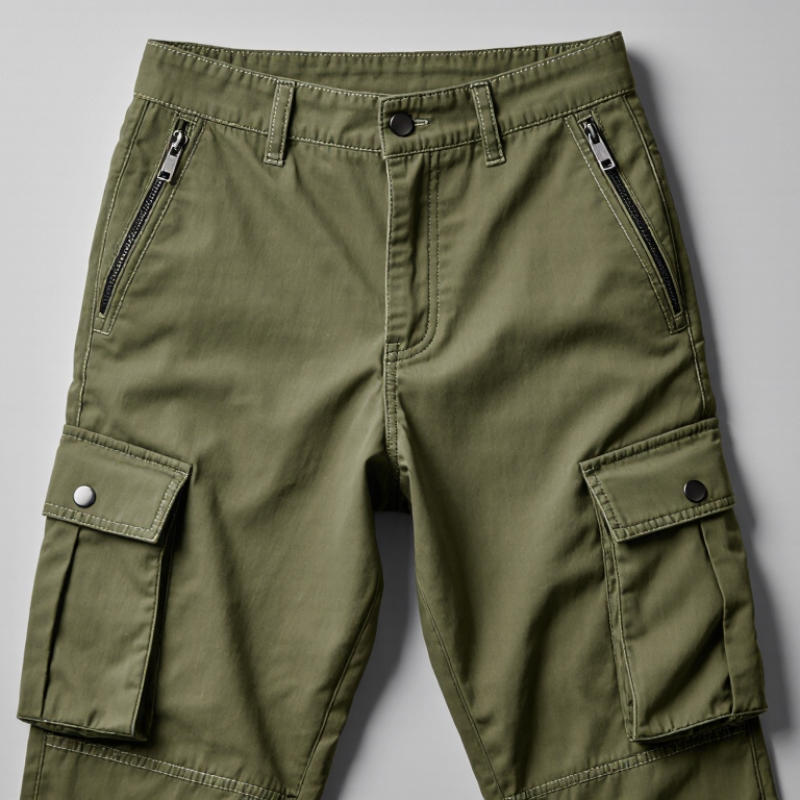
10 Tips for Choosing Custom Cargo Pants for Your Brand

Define Your Brand’s Cargo Pant Purpose and Target Customer

Before selecting fabric or trims, define what your cargo pants must help customers do. Utility pants may carry a phone, wallet, keys, and a small tool. Travel styles may need secure zippers and lighter fabric. Streetwear designs may prioritize silhouette over storage. In fitting sessions, oversized pockets often create bulk around the hips. That detail can weaken comfort.

Describe your target customer through behavior, not age alone. Record their daily movement, preferred rise, climate, work setting, and spending limit. Ask eight to twelve potential buyers what they carry and where each item sits. A simple customer card can reveal useful details. For example, commuters may prefer a flat thigh pocket for transit cards. Outdoor users may need reinforced knees and adjustable hems. Do not assume every customer wants maximum pockets. That is an easy mistake.

McKinsey’s State of Fashion 2025 projects only 2% to 6% fashion-industry growth, increasing pressure on focused product decisions. A clear purpose can reduce unnecessary features and improve sampling efficiency. Fit deserves equal attention. NRF and Appriss Retail reported that 14.5% of United States retail sales were returned in 2023. Poor sizing contributes to avoidable returns. Measure the waist, rise, thigh, knee, inseam, and pocket opening with real users. Test movement while sitting, walking, and climbing stairs. Revise the pattern, even when the first sample looks attractive.

Choose the Right Cargo Pant Style, Fit, and Functional Features

Choosing custom cargo pants starts with the wearer, not the pocket count. Define the activity, climate, and layering needs before drawing the first sample. A relaxed straight leg suits workwear and casual styling, while a tapered leg feels cleaner. Keep the rise comfortable when sitting. Small detail, big difference. Grade sizes carefully, because one block rarely fits every body.

Pocket placement should follow movement. Place bulky cargo pockets below the hip, so they do not press against the waist. Add gussets for easier access. Use secure zippers or low-profile snaps for valuables. Avoid decorative pockets that add weight without purpose. The 2023 NRF and Appriss Retail report estimated that 14.5% of retail sales were returned, with fit influencing many apparel purchases. A clear measurement chart and physical fitting sessions can reduce uncertainty.

Fabric choice shapes the whole experience. Midweight cotton blends offer structure, but excessive stiffness can restrict bending. Test pocket openings with real objects, such as a phone, keys, and a small notebook. Check seam strength after repeated washing. Textile Exchange’s 2024 Materials Market Report highlights growing attention to material transparency, so record fiber content and supplier details. Do not trust the first prototype. I once approved a neat pocket angle that felt awkward while walking. Wear-test samples with different heights and body types, then revise the pattern before bulk production.

10 Tips for Choosing Custom Cargo Pants for Your Brand - Choose the Right Cargo Pant Style, Fit, and Functional Features

Tip Selection Focus What to Check Why It Matters
1 Define the intended use Identify whether the pants are for workwear, outdoor activities, travel, or everyday wear. List the movements and items the wearer needs to accommodate. Purpose guides decisions about fabric weight, reinforcement, pocket layout, and the amount of stretch needed.
2 Choose a suitable style Compare classic straight-leg, relaxed, tapered, and jogger-inspired silhouettes. Consider leg openings, hem finishes, and whether the design should layer over boots. The silhouette affects mobility, layering, and how the garment works across different settings.
3 Select the right fit Review waist, hip, thigh, rise, knee, and inseam measurements. Check movement in a sample by sitting, squatting, and bending. A fit that allows movement without excess fabric is more comfortable and helps reduce restriction or snagging.
4 Match fabric to the use case Consider cotton twill for a structured feel, cotton-polyester blends for easier care, or fabrics with elastane for added stretch. Confirm fabric weight and construction with a swatch. Fiber content and fabric construction influence comfort, durability, breathability, stretch, and care requirements.
5 Plan functional pockets Set the number, position, depth, and closure of each pocket. Test pockets with the intended items, such as a phone, small tools, or a wallet. Pocket capacity and placement affect access, comfort, and how weight is distributed while moving.
6 Check closures and adjustability Evaluate zipper or button fly options, waistband construction, belt loops, drawcords, and pocket closures. Confirm that hardware is easy to use and securely attached. Reliable closures and a secure waistband help the pants stay comfortable and functional during daily activity.
7 Reinforce high-stress areas Inspect the crotch, pocket corners, belt loops, and knees. Consider bar tacks, reinforced seams, or knee reinforcement where wear is expected. Reinforcement can help reduce seam failure and wear in areas that experience repeated stress.
8 Choose practical colors and finishes Compare colors against the intended use and review fabric samples in daylight. Ask how the fabric behaves after washing, including shrinkage and color change. Color and finish influence coordination, maintenance, and how consistently the garment looks over time.
9 Review care and performance needs Confirm washing instructions, drying requirements, and any relevant performance needs, such as quick drying or resistance to light abrasion. Verify claims with appropriate testing. Clear care requirements help users maintain the garment and set realistic expectations for its performance.
10 Approve samples before production Request a sample in the intended fabric and color. Check measurements, stitching, pocket usability, hardware, comfort, and fit across the planned size range. Sample review helps identify construction or fit issues before committing to a full production run.

Select Durable Fabrics, Colors, and Customization Options

Custom cargo pants should begin with fabric performance, not appearance. Textile Exchange’s Materials Market Report 2024 states that polyester represented 59% of global fiber production in 2023. A cotton-polyester ripstop can provide structure, abrasion resistance, and easier care. For lighter uniforms, tightly woven cotton may feel better. Test both options before ordering.

Ask suppliers for abrasion, seam-strength, shrinkage, and colorfastness results. The Ellen MacArthur Foundation’s Jeans Redesign guidelines use 30 home-washing cycles as a practical durability benchmark. Cargo pants need similar testing, especially around knees, seat panels, pocket openings, and bartacks. I have seen attractive samples fail there. That mistake is expensive.

Choose colors that support daily wear. Charcoal, olive, navy, and sand hide practical marks better than pale shades. Still, request lab dips and test them under outdoor light. ISO 105 colorfastness testing can reveal fading that a showroom sample hides. Customization should remain functional: reinforced pocket flaps, secure zippers, adjustable hems, woven labels, and low-profile embroidery. Oversized patches may catch on equipment or increase production waste. UNEP estimates that textiles create 2% to 8% of global greenhouse-gas emissions, so excess decoration deserves a second look. Keep a few imperfections in the process. A slightly uneven sample can expose a problem before bulk production.

Evaluate Manufacturers, Sample Quality, Pricing, and Minimum Orders

Choosing custom cargo pants starts with the manufacturer, not the sketch. Check factory capacity, sewing equipment, inspection records, and communication speed. Request a sample made from the proposed fabric. Inspect pocket alignment, bartacks, zipper movement, waistband recovery, and seam strength. Test shrinkage after washing. Test colorfastness and abrasion resistance. Cargo pockets must hold weight without pulling the garment out of shape.

Material decisions affect both quality and cost. Textile Exchange’s 2024 Materials Market Report recorded 124 million tonnes of global fiber production in 2023; polyester represented 57%, while cotton represented 22%. Ask whether the fabric blend matches your durability and comfort goals. Do not rely only on a soft hand feel. My first costing sheet was too optimistic. Include pattern grading, sample revisions, labels, packaging, freight, duties, and quality inspections. Compare at least three quotations using the same specifications. A low unit price can hide expensive setup charges.

Minimum orders need careful negotiation. Request the factory’s MOQ for each color, size range, and fabric. Ask whether a smaller pilot order is possible, even with a higher unit cost. Confirm payment stages, lead times, defect allowances, and replacement terms in writing. NRF and Appriss Retail estimated US retail returns at 16.9% of annual sales in 2024, worth about 890 billion dollars. Poor fit can become costly. Measure the sample on different body types, then revise the pattern before production. Perfection is unlikely. Document every compromise.

Confirm Production Standards, Branding Details, and Delivery Plans

Tip 1: Confirm production standards before approving custom cargo pants. Ask for the fabric weight, fiber blend, stitching method, and measurement chart. A practical sample should survive repeated washing without twisted seams or uneven pockets. Request inspection photos of waistbands, zippers, and reinforced stress points. Small details matter. Suppliers should also explain their quality-control process and acceptable defect limits. Do not rely on attractive sample images alone. I have seen fit problems appear only after bulk production, which makes early testing essential.

Tip 2: Record every branding detail in one approved document. Specify logo size, placement, thread colors, label material, and printing method. Check whether embroidery feels bulky against the skin. Confirm that care labels remain readable after washing. Ask for a pre-production sample before approving the full order. This step may slow the schedule slightly, but unclear instructions create expensive revisions. My own preference is to mark pocket positions on a technical drawing, because verbal descriptions can be misunderstood.

Tip 3: Build a delivery plan with measurable checkpoints. Confirm sample dates, production time, inspection timing, packing details, and shipping responsibility. Keep a buffer for fabric delays or rejected pieces. A delivery promise without milestones is weak. Request weekly updates during production, especially when the order includes multiple sizes or colors. It is also wise to confirm carton dimensions and shipping documents early. Some plans still fail because buffer time is treated as spare time rather than protection.

FAQS

How should I choose the right cargo pant fit?

Start with the wearer’s activity, climate, and layering needs. A relaxed straight leg suits workwear and casual use. A tapered leg looks cleaner. Check the rise while sitting. Small detail, big difference.

Where should cargo pockets be placed?

Place bulky pockets below the hip to reduce pressure around the waist. Add gussets for easier access. Test the position while walking, sitting, and bending.

What pocket closures work best?

Use secure zippers or low-profile snaps for valuables. Avoid decorative pockets that add weight without purpose. Test each opening with a phone, keys, and a small notebook.

How can I reduce fit problems across different body types?

Grade sizes carefully because one pattern rarely fits every body. Provide a clear measurement chart. Hold physical fittings with people of different heights and body shapes. A chart helps, but bodies remain unpredictable.

What fabric qualities should I check?

Midweight cotton blends can provide useful structure. Excessive stiffness may restrict bending. Check the fiber content and supplier information. Test seam strength after repeated washing.

How should samples be tested before production?

Do not trust attractive sample photos alone. Wear-test samples during walking, sitting, and bending. Check waistbands, zippers, pocket angles, and reinforced stress points. The first prototype may look right but feel wrong.

What production information should I confirm?

Ask for fabric weight, fiber blend, stitching method, measurement charts, and defect limits. Request inspection photos of important areas. Quality-control promises need measurable details.

How should logo and label details be approved?

Record logo size, placement, thread colors, label material, and printing method in one document. Check whether embroidery feels bulky against the skin. Approve a pre-production sample before full production. Verbal instructions can fail.

What should a reliable delivery plan include?

Confirm sample dates, production time, inspection timing, packing details, and shipping responsibility. Request regular updates during production. Keep buffer time for fabric delays or rejected pieces. Buffer time is protection, not spare time.

Conclusion

Choosing Custom Cargo Pants for your brand starts with a clear understanding of their purpose and target customer. Decide whether they are intended for workwear, outdoor use, casual fashion, or a versatile combination, then match the style, fit, pocket layout, closures, and other functional details to customer needs. Fabric strength, comfort, breathability, color selection, and customization options should also support your product concept and expected usage.

Before placing an order, carefully evaluate potential manufacturers through communication, production experience, sample quality, pricing, and minimum order requirements. Confirm fabric specifications, sizing standards, stitching quality, color consistency, logo placement, labels, packaging, and other branding details in writing. It is also important to establish quality-control procedures, production timelines, approval steps, shipping arrangements, and contingency plans. A thoughtful process will help your brand create reliable cargo pants that meet customer expectations while maintaining consistent quality and manageable costs.

Ethan

Ethan

Ethan is a dedicated marketing professional with a deep understanding of our company’s core offerings and strengths. With a passion for articulating complex ideas in an accessible manner, he frequently updates our professional blog, ensuring that our audience stays informed about the latest......