Apparel Manufacturing Blog & Insights
Guides, industry trends, tech pack tips, and custom streetwear manufacturing advice.
China Best Custom Tracksuits Manufacturer for Global Buyers
Table of Contents
- China’s Custom Tracksuit Manufacturing Industry for Global Buyers
- How Custom Tracksuits Are Designed and Produced in China
- Customization Options for Branding, Fabric, Fit, and Teamwear
- Quality Standards, Production Capacity, and Export Compliance
- How Global Buyers Choose and Work with a Chinese Manufacturer
- FAQS
- Conclusion
- Related Posts
Global buyers are seeking sportswear that performs reliably and represents their identity. Custom Tracksuits now serve schools, clubs, corporate teams, retailers, and emerging fashion labels. The demand is practical, not purely decorative. Buyers expect accurate sizing, durable fabric, consistent colors, and dependable delivery.
Industry data supports this shift. McKinsey and The Business of Fashion’s State of Fashion 2025 describes sportswear as a resilient category, although growth remains selective and value-driven. Textile Exchange’s Materials Market Report 2024 recorded approximately 124 million tonnes of global fiber production in 2023. It also projects production could reach 160 million tonnes by 2030. These figures highlight both opportunity and responsibility. Fabric selection, waste control, and transparent sourcing now influence purchasing decisions.
China remains a major manufacturing base for apparel, supported by experienced factories, integrated textile supply chains, and flexible production capabilities. An established manufacturer can manage fabric development, pattern grading, embroidery, printing, sampling, quality inspection, and export packing under one system. Small details matter. A smooth zipper, reinforced pocket, and stable waistband can affect customer satisfaction after repeated washing. Production experience helps identify these risks before bulk manufacturing begins.
However, no factory is perfect. Product quality can vary between samples and mass production without strict controls. That caveat matters. Global buyers should request material specifications, pre-production samples, inspection records, and clear communication procedures. A reliable China Custom Tracksuits manufacturer should provide evidence, not only attractive promises. This guide examines the capabilities, standards, and practical selection criteria that help buyers build durable, professional, and commercially suitable tracksuit programs.
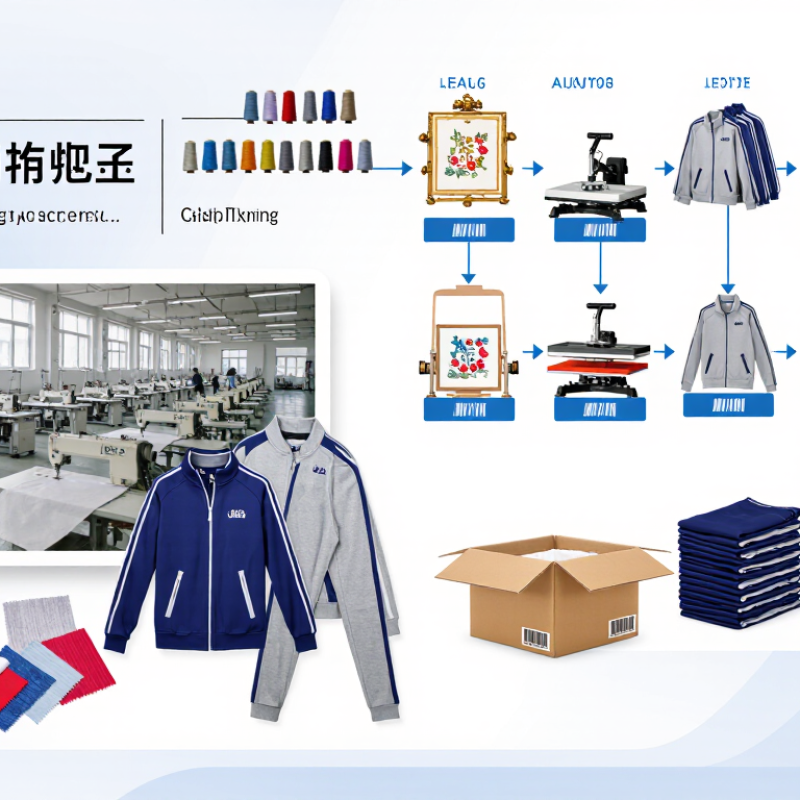
China’s Custom Tracksuit Manufacturing Industry for Global Buyers
China’s custom tracksuit manufacturing industry serves global buyers with flexible production and practical technical support. Our experience covers teamwear, school apparel, fitness clothing, and promotional collections. Each project begins with fabric selection, size charts, artwork checks, and a clear production brief.
Polyester blends offer quick drying performance, while cotton-rich fabrics provide a softer everyday feel. We test fabric weight, color stability, seam strength, and print placement before bulk production. Pattern makers also review sleeve length, trouser balance, and movement around the shoulders. Small details matter. A two-centimeter error can affect comfort across an entire size range.
Reliable manufacturers provide pre-production samples, measurable inspection standards, and traceable packing records. Buyers should review factory capacity, sample quality, communication speed, and export documentation. Independent inspections can add confidence before shipment. We do not claim every order is flawless. Colors may vary slightly between screens and fabric lots, and urgent revisions can disrupt schedules. Honest communication helps control these risks. Clear approval points, realistic lead times, and written specifications usually prevent costly misunderstandings.
How Custom Tracksuits Are Designed and Produced in China
Designing custom tracksuits in China starts with a clear technical brief. Buyers specify fabric weight, stretch, color standards, logo placement, size grading, and delivery targets. A development team then converts these details into CAD sketches and digital pattern files. Fit samples follow. The first sample often exposes sleeve tension or an awkward collar. That feedback matters.
Textile Exchange’s Materials Market Report 2024 states that global fiber production reached 124 million tonnes in 2023. It could rise to 160 million tonnes by 2030. This pressure makes material selection important. Recycled polyester, cotton blends, and certified fibers may reduce resource concerns, but they need verification. A supplier should provide composition tests and colorfastness results, not vague claims. China’s production process commonly combines automated cutting with skilled sewing inspection. Workers check seam strength, zipper movement, pocket alignment, and print adhesion. Small defects still appear.
Production usually moves from fabric inspection to cutting, decoration, sewing, pressing, and final measurement. AQL-based inspections can control random defects, although inspection cannot replace good pattern development. Buyers should review a pre-production sample before bulk manufacturing. Size tolerances require special attention. A two-centimeter error can change the fit noticeably. Delivery planning also needs realism. Holiday shutdowns, fabric delays, and sample revisions can affect schedules. The efficient option is not always the safest one.
Customization Options for Branding, Fabric, Fit, and Teamwear
For global buyers, a custom tracksuit must communicate identity before the team enters the field. A capable China manufacturer can match logos, colors, labels, zippers, and packaging. Branding details should follow a measured tech pack, not casual factory messages. Embroidery suits heavier fleece. Heat transfer works better on lightweight training tops. Small details matter.
Fabric selection affects comfort, durability, and purchase risk. Textile Exchange’s 2024 Materials Market Report records 124 million tonnes of global fiber production in 2023. Polyester remained the dominant fiber, while recycled polyester represented a growing share. Buyers can request moisture-wicking polyester, cotton blends, brushed fleece, or recycled yarns. Each option needs testing for pilling, shrinkage, colorfastness, and seam strength. A perfect first sample is rare. We still revise measurements more often than expected.
Fit should reflect movement, climate, and team use. A relaxed cut supports travel. A tapered cut suits warm-up sessions. Graded size charts reduce problems across international markets. McKinsey and WFSGI’s Sporting Goods 2024 report observed roughly 6% annual industry growth from 2021 to 2023, increasing pressure for reliable delivery. Teamwear programs therefore need size sets, replacement units, player numbering, and consistent color batches. These details are easy to overlook. They should not be.
China Best Custom Tracksuits Manufacturer for Global Buyers
Customization options for branding, fabric, fit, and teamwear can be matched to different performance needs. The chart shows representative fabric-weight benchmarks commonly used for custom teamwear applications.
Lightweight fabrics are typically selected for match kits and high-intensity training, while heavier fabrics are more suitable for warm-up and travel tracksuits that require additional structure and comfort.
Quality Standards, Production Capacity, and Export Compliance
China Best Custom Tracksuits Manufacturer for Global Buyers
Quality Standards, Production Capacity, and Export Compliance
Selecting a custom tracksuit manufacturer requires more than comparing prices. Experienced buyers inspect fabric weight, stitching density, colorfastness, and measurement accuracy. A dependable factory should provide pre-production samples and a clear approval process. I recommend checking whether the sample matches bulk fabric under daylight. Small shade differences can become costly across thousands of garments.
Quality control should continue during production. Inspectors can review cutting, seam strength, logo placement, and finishing at several stages. An AQL-based inspection report adds useful evidence, although it cannot replace practical judgment. Production capacity also matters. Ask about monthly output, sewing lines, peak-season schedules, and backup material suppliers. A factory may promise 50,000 sets monthly, but its real capacity can change during busy periods. Written production plans reduce this uncertainty.
Export compliance needs equal attention. The manufacturer should prepare accurate invoices, packing lists, carton markings, and product descriptions. Buyers should confirm applicable textile labeling, testing, packaging, and customs requirements before shipment. Documentation errors can delay otherwise acceptable cargo. Reliable suppliers explain these risks instead of hiding them. No factory is flawless. Even strong systems need follow-up, especially after a new fabric or sizing block is introduced. Regular video inspections, sealed samples, and recorded approvals create a more traceable process for global buyers.
China Best Custom Tracksuits Manufacturer for Global Buyers - Quality Standards, Production Capacity, and Export Compliance
The information below presents practical industry reference points for custom tracksuit sourcing in China. Actual specifications, capacity, pricing, lead time, and compliance status must be confirmed through supplier audits, approved samples, laboratory reports, and export documentation.
| Evaluation Dimension | Industry Reference Data | Recommended Buyer Requirement | Verification Method | Application or Compliance Relevance |
|---|---|---|---|---|
| Common Fabric Composition | Polyester, cotton, elastane, or blended knitted fabrics are commonly used for tracksuits. Typical blends include polyester-rich fabric for durability and cotton-rich fabric for softness. | Specify fiber percentages, fabric weight, stretch direction, surface finish, and performance requirements before sampling. | Review the fabric specification sheet and conduct fiber-composition testing. | Supports accurate labeling, consistent hand feel, and repeat production. |
| Typical Fabric Weight | Lightweight training fabrics are often approximately 120–180 g/m²; midweight sweatshirt or fleece fabrics are commonly approximately 220–350 g/m². Actual ranges vary by construction and season. | Approve a sealed fabric swatch with a permitted tolerance, such as ±5% of the agreed fabric weight. | Use a calibrated fabric weighing method and compare bulk production against the approved standard. | Affects warmth, drape, shipping weight, comfort, and seasonal suitability. |
| Size Range | Custom programs commonly cover adult sizes from XS to 3XL, with extended sizing available when the pattern and order quantity support it. | Provide a measurement chart in centimeters or inches, including grading rules and tolerance limits. | Perform pre-production and final random measurements on finished garments. | Reduces fit-related returns and supports consistent international sizing. |
| Garment Measurement Tolerance | Commercial tolerances commonly depend on the measurement point, fabric stretch, and garment construction. A practical starting reference is ±1–2 cm for major body measurements. | Set tolerances by measurement point in the technical package instead of using one tolerance for every dimension. | Measure garments flat under controlled procedures using a signed measurement specification. | Provides an objective basis for inspection and claims handling. |
| Colorfastness Testing | Colorfastness is commonly assessed for washing, rubbing, perspiration, water, and light using relevant ISO 105 test methods. | Define minimum grades for each test based on destination-market requirements and garment use. | Request a laboratory report linked to the exact fabric, color, and production lot. | Helps control color transfer, fading, and staining during consumer use. |
| Dimensional Stability | Dimensional change after washing is commonly evaluated using ISO 5077 together with a specified washing procedure such as ISO 6330. | Set shrinkage limits separately for length and width after the agreed number of wash cycles. | Test pre-washed and post-washed measurements from bulk-production samples. | Important for fit retention and care-label accuracy. |
| Pilling Resistance | Pilling performance depends on fiber type, yarn, knit structure, finishing, and laundering. No single universal pass level applies to every tracksuit. | Specify the test method, number of cycles, rating scale, and minimum acceptable result. | Use a recognized textile laboratory and compare results with an approved control sample. | Supports long-term appearance and perceived product quality. |
| Seam and Construction Quality | Quality control normally covers stitch density, seam allowance, skipped stitches, open seams, puckering, zipper operation, drawcord security, and pocket strength. | Include construction diagrams, stitch requirements, reinforcement points, and a defect classification system. | Conduct inline inspections and final inspections using an approved checklist. | Reduces premature failures during wear, washing, and shipment handling. |
| Inspection Sampling | Many apparel buyers use an acceptance sampling plan based on AQL principles. AQL 2.5 for major defects is a common commercial reference, but it is not a legal universal requirement. | Agree on lot size, sample size, critical, major, and minor defect limits before production. | Use a documented third-party or internal final inspection report. | Creates a consistent and measurable release standard for finished goods. |
| Customization Options | Common options include cut-and-sew patterns, sublimation, screen printing, embroidery, heat transfer, woven labels, hangtags, zipper selection, piping, and color blocking. | Approve artwork, color references, placement measurements, decoration method, and wash-care requirements. | Compare production samples against approved artwork and a signed pre-production sample. | Controls brand presentation and minimizes decoration defects. |
| Sample Development | A normal development sequence includes design review, fabric confirmation, first sample, fit revision, pre-production sample, and bulk production approval. | Require written approval at each stage and keep a controlled sample or specification record. | Track sample comments, revision dates, measurements, and approvals. | Reduces errors caused by verbal instructions or outdated files. |
| Indicative Production Capacity | Production capacity varies significantly by factory size, product complexity, workforce, season, and subcontracting controls. Capacity should be quoted as units per month for the specific style, not as a general factory claim. | Request available monthly capacity, current utilization, reserved capacity, and the number of production lines assigned to the order. | Verify through factory assessment, production records, line observation, and capacity planning documents. | Helps evaluate whether delivery commitments are realistic. |
| Indicative Lead-Time Planning | Custom apparel schedules commonly include time for sampling, material purchasing, production, inspection, and shipment. The actual schedule depends on materials, quantity, and approval speed. | Obtain a milestone schedule covering sample approval, material arrival, cutting, sewing, finishing, inspection, and dispatch. | Compare the agreed schedule with purchase orders, production updates, and inspection dates. | Improves delivery planning and reduces launch-date risk. |
| Quality Management System | ISO 9001 is an internationally recognized quality-management standard. Certification is optional unless required by the buyer or contract. | Request a current certificate, certification scope, issuing body, and factory address; confirm that the certificate applies to the production site. | Validate the certificate with the issuing certification body where possible. | Provides evidence of documented quality-management processes. |
| EU Chemical Compliance | EU Regulation (EC) No 1907/2006, commonly known as REACH, regulates chemicals and substances of very high concern in relevant products and supply chains. | Require a material and chemical declaration supported by risk-based testing for dyes, prints, coatings, trims, and accessories. | Review current laboratory reports and supplier declarations for the exact materials used. | Supports placing textile products on the European Union market. |
| EU Textile Fiber Labeling | Regulation (EU) No 1007/2011 establishes requirements for textile fiber names and fiber-composition labeling in the European Union. | Ensure the fiber content on labels matches the verified composition and follows the destination-market language rules. | Compare label artwork with composition test results and packaging documentation. | Helps meet EU textile labeling obligations. |
| US Fiber Labeling | Textile products sold in the United States are generally subject to fiber-content labeling requirements administered by the Federal Trade Commission. | Confirm fiber content, country-of-origin marking, manufacturer or marketer information, and care instructions for the intended market. | Review label artwork and supporting test or supplier documentation before shipment. | Supports compliant retail labeling in the United States. |
| US Flammability Consideration | Applicable apparel products may be evaluated under the U.S. flammability standard in 16 CFR Part 1610, subject to product scope and exemptions. | Determine whether the final garment falls within the applicable scope and arrange testing when required. | Obtain a laboratory report for the finished garment or representative material. | Addresses U.S. product-safety requirements for applicable apparel. |
| Children’s Product Requirements | Children’s apparel sold in the United States may trigger requirements under the Consumer Product Safety Improvement Act, including limits or testing for certain materials and components. | Identify the intended age group and assess testing, certification, tracking-label, drawcord, and small-part requirements. | Use a compliance laboratory and prepare applicable certificates and test records. | Important for children’s tracksuits and youth collections. |
| Care Labeling | Care symbols are commonly based on ISO 3758, while destination markets may have additional or different legal labeling requirements. | Base washing, drying, ironing, and bleaching instructions on verified performance testing. | Compare care instructions with dimensional-stability, colorfastness, and finish-performance results. | Helps prevent consumer damage and care-label disputes. |
| Packaging and Carton Control | Export shipments commonly use individual polybags or recycled-content alternatives, master cartons, carton markings, and packing lists. | Specify carton dimensions, gross and net weight limits, barcode format, packing ratio, and moisture-protection requirements. | Check packaging during final inspection and verify carton data against shipping documents. | Reduces warehouse, customs, and transport-handling errors. |
| Export Documentation | Common documents include commercial invoice, packing list, transport document, customs declaration data, and certificate of origin when required by the destination or trade arrangement. | Confirm document responsibility, required data fields, harmonized tariff classification, and origin information before booking shipment. | Review a complete document set before cargo release. | Supports customs clearance and accurate import declarations. |
| Country of Origin | Origin marking and preferential-origin eligibility depend on applicable customs rules and the actual manufacturing process. | Do not rely only on the shipping location; obtain an origin assessment based on the production facts and destination rules. | Review production records, material origins, and customs broker guidance. | May affect marking, duty treatment, and import documentation. |
| Social and Ethical Audits | Buyers may request audits covering working hours, wages, occupational safety, forced labor, child labor, and management systems. | Define the required code of conduct, audit scope, corrective-action process, and subcontracting disclosure rules. | Use a qualified independent auditor and verify corrective-action closure. | Supports responsible sourcing and buyer supply-chain policies. |
| Traceability | Basic traceability links the finished garment to purchase orders, fabric lots, trims, production dates, inspection records, and shipment cartons. | Require lot identification and retention of quality and compliance records for an agreed period. | Conduct a document-trace exercise from finished goods back to material suppliers. | Improves recall readiness, complaint investigation, and supply-chain control. |
| Sustainability Evidence | Environmental claims should be supported by verifiable material and process evidence rather than general marketing statements. | Request transaction certificates or test reports when claiming recycled content, organic fiber, restricted chemicals, or other attributes. | Check certificate validity, scope, product coverage, and chain-of-custody information. | Reduces the risk of unsupported environmental claims. |
| Commercial Readiness | Reliable export programs normally require a signed specification, approved sample, agreed tolerances, inspection plan, payment terms, and shipping responsibilities. | Use a purchase contract that clearly defines quality standards, delivery dates, nonconformity remedies, and required documents. | Complete a pre-production document review before authorizing bulk cutting. | Creates a clear commercial and quality-control framework for global buyers. |
How Global Buyers Choose and Work with a Chinese Manufacturer
Global buyers usually begin with a measurable product brief, not a beautiful reference photo. State fabric composition, GSM, color codes, size range, logo placement, and target quantity. A Chinese manufacturer should answer these details clearly and explain what it cannot guarantee. Samples reveal problems. The first sample may fit poorly, but ignoring that issue creates expensive production changes.
Before placing an order, buyers should review stitching, fabric recovery, zipper quality, and print durability. Ask for a size chart with garment measurements, not only standard labels. Confirm the sampling fee, production lead time, packaging method, and payment schedule in writing. Photos help, but physical inspection remains more reliable. A third-party quality check can also compare finished garments with the approved sample.
Good cooperation depends on practical communication. Share one updated specification sheet after every revision. Use clear photos with measurements and mark each change. Factory production meetings may expose small misunderstandings, especially around color and fit. Do not assume silence means agreement. Buyers should also check shipping documents and applicable import requirements for their market. The process is rarely perfect. A minor mistake in my imagined workflow is treating the first quotation as final; fabric prices and order quantities can change. Careful buyers leave room for verification, negotiation, and improvement.
FAQS
Provide fabric weight, stretch level, colors, logo placement, size range, and delivery targets. A clear technical brief prevents avoidable revisions.
Designers convert the technical brief into CAD sketches and digital pattern files. Fit samples then test sleeves, collars, pockets, and overall movement.
Options include polyester, recycled polyester, cotton blends, brushed fleece, and certified fibers. Each fabric should undergo tests for shrinkage, pilling, colorfastness, and seam strength.
Request composition tests and colorfastness results from the supplier. Do not rely on broad sustainability claims without documents.
Production usually includes fabric inspection, cutting, decoration, sewing, pressing, and final measurement. Automated cutting improves consistency, while skilled workers inspect construction details.
Inspect seam strength, zipper movement, pocket alignment, print adhesion, and size measurements. A two-centimeter error can noticeably change the fit. Small defects still happen.
Use graded size charts and approve a complete pre-production sample. Relaxed cuts suit travel, while tapered cuts support warm-up activities. The first sample is rarely perfect.
Build time for fabric delays, sample revisions, holidays, inspections, and packaging. The fastest schedule is not always the safest. Plans need breathing room.
Conclusion
China’s custom tracksuit manufacturing industry offers global buyers a flexible and efficient way to develop teamwear, sportswear, and promotional apparel. From initial concept to final production, manufacturers can support pattern development, sample making, fabric selection, size grading, cutting, sewing, printing, embroidery, labeling, and packaging. Custom Tracksuits can be adapted to different branding requirements, performance needs, climates, and wearer preferences, with options for colors, logos, materials, fits, pocket designs, zippers, cuffs, and coordinated team collections.
For international buyers, selecting a suitable Chinese manufacturer requires careful evaluation of product quality, production capacity, communication, lead times, and export procedures. Reliable suppliers should maintain consistent quality controls, inspect materials and finished garments, provide clear samples, and follow applicable safety and labeling requirements. Buyers can improve cooperation by preparing detailed specifications, confirming customization limits, reviewing samples, agreeing on quality standards, and establishing a practical schedule for production, inspection, shipping, and documentation.
Blog Tags: