SYKE Fashion Knowledge Hub

Apparel Manufacturing Blog & Insights

Guides, industry trends, tech pack tips, and custom streetwear manufacturing advice.

0%

Choosing the right Custom Puffer Vests supplier requires more than comparing colors, logos, and quoted prices. Global buyers must examine insulation, shell fabric, stitching, sizing, sampling, packaging, and delivery reliability. A vest may look impressive on a studio screen, yet feel bulky under a coat. Small details matter.

Yvon Chouinard, founder of Patagonia and a respected outdoor-apparel authority, once said, “The best thing you can do is buy less.” His words challenge buyers to value performance over unnecessary decoration. This principle is especially useful when reviewing the 7 Best Custom Puffer Vests for Global Buyers. Strong candidates should offer practical warmth, consistent construction, traceable materials, and flexible customization. Recycled nylon, responsibly sourced down alternatives, and durable water-resistant finishes may support different market expectations. However, sustainability claims still need evidence. A green label alone proves little.

This guide compares seven options through a buyer’s lens. It considers wholesale suitability, minimum order quantities, customization depth, sample quality, production communication, and after-sales support. We will also look at how each vest performs in real situations: a cold warehouse, a windy commute, or an outdoor brand event. Not every supplier will excel in every category. Some may offer excellent pricing but weaker size consistency. Others may provide beautiful prototypes yet struggle with larger orders. That is an uncomfortable reality. Buyers should test before committing.

The strongest Custom Puffer Vests are not simply fashionable. They should protect the wearer, represent the brand clearly, and remain dependable across markets.、】【
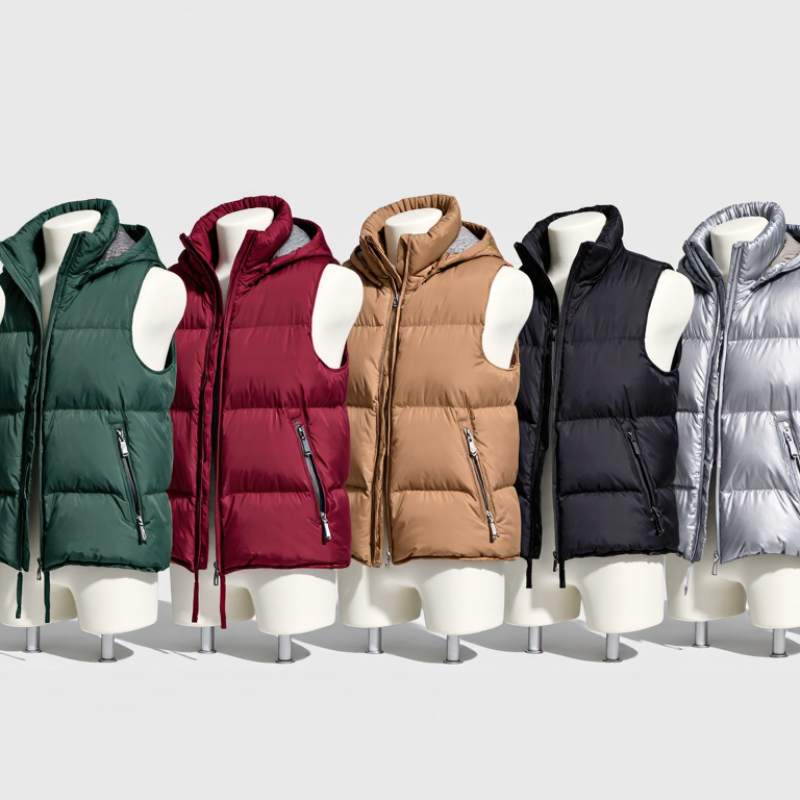
7 Best Custom Puffer Vests for Global Buyers?

What Defines a High-Quality Custom Puffer Vest

A high-quality custom puffer vest begins with materials that perform beyond a product photograph. I examine shell fabric for tight weaving, smooth finishing, and resistance to light moisture. The fabric should feel protective, not stiff or noisy. Good insulation must recover after compression. Down alternatives can work well when fiber structure is stable and evenly distributed. Fill consistency matters. A cold spot near the shoulder can quickly reveal weak production control.

Construction separates a dependable vest from a decorative sample. I look for even quilting, secure seams, strong zippers, and clean binding around the armholes. Each panel should match the approved measurement chart. Small errors become expensive across international orders. Custom logos, colors, and pockets also need repeatable placement. A pre-production sample is essential, though it is not perfect evidence. I have seen excellent samples followed by uneven bulk stitching. That risk deserves honest discussion.

Reliable suppliers should provide fiber content, fill weight, size tolerances, care instructions, and test records when requested. Buyers should confirm whether water resistance, colorfastness, and insulation claims reflect actual testing. Labels must suit the destination market and communicate care clearly. Packaging should protect loft without crushing the vest for too long. I prefer suppliers who explain limitations instead of promising everything. Quality is measurable, but judgment still matters.

Key Features and Materials for Different Global Markets

7 Best Custom Puffer Vests for Global Buyers

Key Features and Materials for Different Global Markets

Custom puffer vests should match climate, movement, and customer habits. Seven strong options cover most international needs. A recycled polyester vest suits mild urban markets and supports sustainability goals. A responsibly sourced down vest offers excellent warmth with low weight for cold, dry regions. Synthetic insulation performs better in damp weather and frequent washing. A durable quilted vest fits outdoor workwear markets where abrasion resistance matters. A packable vest serves travelers and compact retail displays. A reversible vest gives buyers two styling choices in one garment. An extended-size vest improves comfort and broadens market access.

Shell materials change the product’s performance. Nylon feels light and resists wind. Polyester usually offers easier color consistency and cost control. A matte finish may suit European streetwear, while brighter colors can attract younger urban shoppers in parts of Asia. For humid areas, use breathable panels and lighter insulation. For colder markets, add a higher collar, secure armholes, and adjustable hems. These details matter.

Test samples before bulk production. Check loft after compression, zipper strength, seam leakage, and colorfastness. Measure warmth with real layering, not only laboratory figures. Local labeling and textile requirements also need verification. Fit is often underestimated. A vest that works over a thin shirt may feel tight over winter knitwear. One weakness remains: universal sizing rarely serves every market well. Regional measurements and honest product data require more work, but they reduce returns.

7 Custom Puffer Vest Design Benchmarks for Global Markets

Recommended insulation and shell-fabric weights by climate and buying requirement

How to read the chart: Insulation fill weight is shown in grams per square metre, while shell fabric weight represents the approximate basis weight of the outer fabric. Lightweight nylon is suitable for packable travel vests, recycled polyester offers practical durability and easier care, and ripstop constructions provide better abrasion resistance for outdoor markets. The benchmarks are representative product-development specifications rather than company or brand data.

Seven Leading Custom Puffer Vest Options to Consider

For global buyers, custom puffer vests need more than attractive stitching. Seven leading options deserve attention. A lightweight recycled-nylon vest suits mild city weather and promotional campaigns. A down-filled vest provides strong warmth with less bulk, but suppliers should show fill-power and traceability documents. A synthetic-insulated vest performs better in damp conditions and simplifies care instructions. A packable vest folds into a small pouch, making it useful for travel and outdoor retail. A workwear version needs reinforced shoulders, secure pockets, and durable zippers. Small details matter.

A reversible vest gives buyers two colorways from one garment, although extra seams can increase production costs. An extended-size vest offers broader market access when grading is tested carefully, not simply enlarged. In practical sampling, checking chest measurements, arm openings, and hem tension reveals problems earlier than photos do. Request fabric composition, insulation weight, colorfastness results, and washing instructions before approving bulk production. Test a sample in wind and light rain. It may expose weak snaps or uneven filling. Packaging should protect loft without excessive compression. Regional labeling, fiber disclosures, and safety documentation also require review, because requirements differ between markets. A lower price can look appealing, yet inconsistent sizing may create expensive returns.

7 Best Custom Puffer Vests for Global Buyers? - Seven Leading Custom Puffer Vest Options to Consider

Option Insulation Type Recommended Use Typical Weight Weather Protection Customization Possibilities Best Buyer Profile
1. Lightweight Packable Vest Synthetic polyester fill Travel, commuting, layering Approximately 250–400 g Water-repellent shell; suitable for light rain and wind Color matching, woven labels, printed logos, zipper selection, packable pouch Retailers seeking an affordable, versatile everyday product
2. Recycled-Fabric Puffer Vest Recycled polyester insulation and shell options Casual wear, outdoor lifestyle collections Approximately 350–550 g Wind-resistant fabric with optional water-repellent finish Recycled-material documentation, custom lining, hangtags, packaging, color palette Sustainability-focused buyers and environmentally conscious retailers
3. Premium Down-Filled Vest Responsible down or down-blend insulation Cold-weather layering and premium outdoor apparel Approximately 300–500 g Lightweight shell with wind resistance; not intended as a waterproof outer layer Fill-power selection, baffle design, shell fabric, trim, labels, embroidery Buyers targeting a higher-priced, warmth-focused product line
4. Water-Resistant Workwear Vest High-loft synthetic insulation Construction, logistics, maintenance, outdoor work Approximately 550–800 g Durable water-repellent finish, wind-resistant shell, reinforced panels Utility pockets, reflective tape, ID loops, adjustable hem, embroidery, safety colors Corporate uniform programs and industrial distributors
5. Reversible Puffer Vest Synthetic polyester fill Fashion retail, promotional apparel, travel Approximately 450–700 g Wind-resistant construction; one or both sides may use water-repellent fabric Two-color design, reversible labels, dual pockets, contrasting zippers and trims Buyers looking for two styling options in one garment
6. High-Visibility Puffer Vest Synthetic insulation with fluorescent outer fabric Road work, warehousing, delivery, winter site operations Approximately 600–850 g Wind-resistant shell with reflective components; certification depends on the final design Reflective tape layout, safety colors, company identification, pockets, detachable hood Safety-equipment buyers requiring visibility and insulation
7. Hybrid Puffer and Fleece Vest Synthetic insulation with stretch fleece side panels Hiking, golf, cycling, active commuting Approximately 400–650 g Wind-resistant front and back panels with breathable side sections Panel color combinations, stretch-fabric selection, pocket placement, reflective details Outdoor and sportswear buyers prioritizing mobility and breathability

Note: Weight, insulation performance, weather resistance, minimum order quantity, and compliance requirements vary according to fabric, fill weight, sizing, construction, and destination market. Final specifications should be confirmed through product samples and testing.

How to Compare Suppliers, Pricing, and Production Standards

7 Best Custom Puffer Vests for Global Buyers

The best custom puffer vest depends on use, climate, and order volume. Compare suppliers through samples, not promises. Check shell fabric, insulation weight, stitching density, zipper quality, and size accuracy. Ask whether the insulation is down, synthetic, or recycled polyester. Request test reports for warmth, colorfastness, shrinkage, and seam strength. A reliable supplier should explain production tolerances clearly.

Pricing needs a detailed breakdown. Review fabric costs, filling, trims, packaging, sampling, tooling, and shipping separately. A low quote may hide weak insulation or limited quality control. Ask about minimum order quantities and payment stages. Confirm lead times in writing, including sample approval and final inspection. Production standards should include inline checks, needle control, measurement records, and carton inspections. The first sample is rarely perfect. That is normal, but repeated defects are not.

Tips: Compare at least three suppliers using the same specification sheet. Measure one finished vest yourself. Photograph uneven quilting, loose threads, or compressed filling. Ask for a pre-shipment inspection before balance payment. Certifications can support trust, but verify their scope and validity. Do not judge value from price alone. A slightly higher unit cost may reduce returns, delays, and customer complaints. However, buyers sometimes over-specify features that customers never notice. Recheck the design before production.

Ordering, Customization, and International Shipping Essentials

7 Best Custom Puffer Vests for Global Buyers

Ordering, Customization, and International Shipping Essentials

Custom puffer vests work well for outdoor teams, retail collections, and seasonal campaigns. The strongest choices often include lightweight travel vests, recycled-fabric styles, reversible designs, workwear cuts, oversized fits, children’s sizes, and insulated premium models. Each option needs different measurements, filling weights, and testing standards. Appearance alone is not enough.

Request a detailed sample before placing a bulk order. Check zipper movement, stitching around the armholes, pocket depth, and filling distribution. A sample may look excellent but feel too warm in humid climates. Ask for fabric composition, insulation details, color references, size charts, and wash-care instructions. Small logo placement errors become expensive when repeated across hundreds of units.

International shipping requires careful planning. Confirm carton dimensions, gross weight, delivery terms, production time, and customs documents with the supplier. Use clear commercial descriptions and accurate product values. Import taxes and clearance fees may vary by destination, so buyers should verify local requirements independently. Packaging also matters; compressed vests can arrive creased or lose shape temporarily. Allow extra time for inspections and port delays. I have found that rushed approvals cause more problems than slow production. Still, even a carefully checked order can need adjustment after the first delivery.

FAQS

What materials should a high-quality custom puffer vest use?

Choose tightly woven nylon or polyester with a smooth, protective finish. The fabric should resist light moisture without feeling stiff or noisy. Insulation must recover after compression. Evenly distributed fill prevents cold spots near the shoulders.

How can buyers check vest construction quality?

Inspect quilting lines, seams, zippers, armhole binding, and panel measurements. Stitching should remain even around pockets and shoulders. Test the zipper several times. Small errors can multiply across large orders.

Why is a pre-production sample important?

A sample reveals fit, pocket depth, filling distribution, and logo placement. It is useful, but not perfect evidence. Bulk stitching may still become uneven. Approval should include clear measurements and written expectations.

Which insulation works best in different climates?

Down alternatives suit stable fiber structures and controlled distribution. Synthetic insulation handles damp weather and frequent washing better. Lightweight filling suits humid areas. Cold regions may need more fill and a higher collar.

What vest features suit different customer needs?

Packable designs suit travelers and compact retail displays. Reversible styles offer two appearances. Durable quilting supports outdoor workwear. Extended sizing improves comfort and market access. Children’s versions need separate measurements and safety checks.

How should shell fabrics match regional markets?

Nylon feels light and blocks wind. Polyester often supports consistent colors and cost control. Matte finishes may suit understated streetwear. Brighter colors can attract younger urban shoppers. Local preferences still need real testing.

What information should buyers request from suppliers?

Request fiber content, fill weight, size tolerances, care instructions, and test records. Confirm colorfastness, water resistance, and insulation claims. Ask for fabric references and accurate size charts. Promises alone are not enough.

What should international buyers check before shipping?

Confirm carton dimensions, gross weight, delivery terms, production time, and customs documents. Verify local taxes and clearance requirements independently. Use accurate product descriptions and values. Allow extra time for inspections and port delays.

Can compressed vests lose their shape during delivery?

Yes, extended compression can create creases or temporarily reduce loft. Packaging should protect the filling without crushing it. Let the vest recover before judging its final appearance. Sometimes adjustment is still needed after delivery.

Why does fit require regional testing?

A vest fitting over a thin shirt may feel tight over winter knitwear. Universal sizing rarely serves every market well. Test several body shapes and layering conditions. Fit work takes longer, but it can reduce returns.

Conclusion

Choosing the right Custom Puffer Vests requires more than comparing appearance and price. A high-quality vest should combine durable outer fabric, reliable insulation, secure stitching, smooth zippers, and practical details suited to its intended market. Different climates and customer preferences may call for lightweight recycled filling, water-resistant shells, breathable construction, or extra warmth for colder regions. This guide presents seven types of custom puffer vest options to consider, ranging from lightweight promotional styles to premium outdoor designs and versatile everyday models.

For global buyers, supplier evaluation is equally important. Compare material specifications, sample quality, customization capabilities, minimum order quantities, production timelines, quality-control procedures, and transparent pricing. Buyers should also confirm size grading, labeling, packaging, payment terms, and international shipping arrangements before placing an order. By reviewing samples carefully and communicating detailed requirements, businesses can select dependable Custom Puffer Vests that match their target markets, brand identity, budget, and delivery expectations.

Liam

Liam

Liam is a dedicated marketing professional with a profound expertise in our company's innovative product lineup. With years of experience in the industry, he possesses a comprehensive understanding of market trends and consumer behavior, enabling him to craft compelling marketing strategies that......