Choosing the right manufacturer matters when a varsity jacket represents a school, team, brand, or personal identity. In 2026, Custom Varsity Jackets must combine durable construction, accurate sizing, and dependable production. A beautiful mockup means little if the sleeves twist or the chenille letters peel.
This guide examines manufacturers through practical standards, not attractive promises. We consider wool quality, leather or vegan sleeve options, ribbed cuffs, embroidery precision, and button strength. We also look at sample policies, production timelines, minimum order quantities, and communication throughout the project. Experienced buyers know that small details matter. A crooked name can ruin an otherwise excellent jacket.
Reliable manufacturers should explain their materials and quality-control process clearly. They should provide detailed size charts, pre-production samples, and realistic delivery estimates. Responsible sourcing also matters, including safe workplaces and compliance with applicable labor and product standards. Customer reviews can help, but they should not replace direct questions or physical sample checks.
No manufacturer is perfect. Delays happen. Colors may differ slightly between screens and fabric. This guide recognizes those limits and encourages careful comparison. The best partner is not always the cheapest option. It is the manufacturer that delivers consistent workmanship, honest communication, and useful support when revisions become necessary. Expect evidence, not exaggeration.
What Makes a Custom Varsity Jacket Manufacturer the Best in 2026?
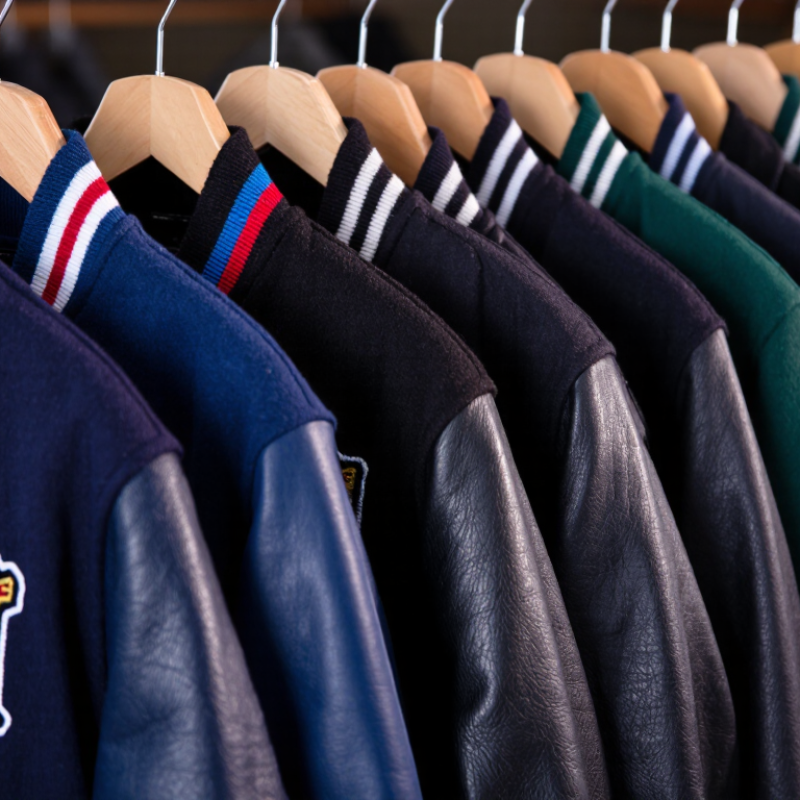
In 2026, the best custom varsity jacket manufacturer offers more than attractive designs. It combines practical experience, technical knowledge, and dependable production control. A skilled team should explain fabric weight, wool blend ratios, leather alternatives, lining choices, and embroidery limits clearly. They should also provide a physical sample before bulk production. Digital images can hide uneven stitching and inaccurate colors.
Reliable manufacturers use measurable quality standards. They check sleeve attachment, snap strength, pocket alignment, and embroidery density at several production stages. A jacket with 600–800 GSM body fabric may feel substantial, but comfort still depends on lining and fit. Accurate size charts matter too. A two-centimeter mistake can change the entire silhouette. Manufacturers should record material sources and inspect incoming fabrics before cutting. Clear records make problems easier to trace.
Communication is another defining factor. The best teams confirm artwork, measurements, delivery schedules, and revision limits in writing. They can handle small orders without treating them as unimportant. They should also explain production capacity honestly, rather than promising an unrealistic deadline. Even experienced manufacturers make mistakes. I would question any supplier claiming perfect results every time. A responsible team admits errors, offers a practical correction, and improves its inspection process. Customer feedback, factory photographs, and independent quality checks can reveal whether that promise is real.
Key Factors for Comparing Custom Varsity Jacket Manufacturers
When comparing custom varsity jacket manufacturers in 2026, begin with material evidence. Textile Exchange’s 2024 Materials Market Report recorded 124 million tonnes of global fiber production in 2023. That scale makes fiber traceability important. Ask for the wool blend percentage, recycled content, fabric weight, and supplier documentation. A 750–800 GSM body usually feels warmer than a lightweight school jacket. However, weight alone does not prove durability.
Request a physical sample before approving bulk production. Inspect the ribbed cuffs, snap buttons, sleeve seams, embroidery density, and pocket reinforcement. Pull the sleeve gently. Loose threads often reveal weak quality control. Compare measurement charts against one finished sample. The smallest errors can create costly returns. Manufacturers should also explain their inspection process, acceptable defect limits, and replacement policy. ISO 9001 certification can support process confidence, but it cannot replace your own inspection.
Production terms need equal attention. Compare minimum order quantities, sample fees, lead times, packaging, payment stages, and landed costs. The International Trade Centre highlights the complexity of apparel supply chains, where transport and sourcing decisions affect final prices. A low factory quote may exclude freight, duties, or correction costs. I once focused too heavily on unit price and underestimated revision time. That approach was not practical. Use a scorecard with quality, communication, compliance, traceability, and delivery reliability. No scorecard is perfect. Ask manufacturers for recent production photos, test reports, and a clear timeline with milestone dates.
How Custom Varsity Jacket Manufacturers Design and Produce Their Products
How Custom Varsity Jacket Manufacturers Design and Produce Their Products
Custom varsity jacket manufacturers begin with a technical design brief, not a sketch alone. The brief defines body fabric, sleeve material, rib structure, embroidery size, measurements, and stitching tolerance. Designers often build a digital pattern before producing a physical sample. This reduces cutting waste and exposes problems, such as heavy patches pulling the shoulder seam. Textile Exchange’s Materials Market Report 2024 estimated global fiber production at 124 million tonnes in 2023. It projects production may reach 160 million tonnes by 2030. Therefore, manufacturers should record fiber content and supplier details carefully. However, these figures cover all fibers, not varsity jackets specifically.
Production usually follows sampling, grading, cutting, decoration, assembly, pressing, and inspection. Skilled teams check collar recovery, zipper alignment, pocket strength, and patch adhesion. A small measurement error can change the jacket’s appearance noticeably. The International Organization for Standardization provides textile testing standards for colorfastness, seam performance, and dimensional stability. Responsible factories use suitable tests before bulk production. Yet, testing cannot replace practical judgment. A perfect sample may still reveal discomfort during movement.
Tips: Request a measured tech pack, a size-set sample, and a written inspection checklist. Confirm whether wool, recycled polyester, leather, or synthetic alternatives are used. Ask for wash-test results and close-up photos of embroidery. A cheaper sample is not always cheaper after corrections. This part is easy to underestimate.
Top Regions and Supplier Types for Custom Varsity Jacket Manufacturing
2026 Best Custom Varsity Jackets Manufacturers?
Top Regions and Supplier Types for Custom Varsity Jacket Manufacturing
North American manufacturers suit schools, clubs, and retailers needing close communication. They often provide local fittings, small production runs, and faster sample revisions. Their costs may be higher, especially for wool bodies and genuine leather sleeves. However, nearby production can reduce shipping uncertainty and simplify quality discussions.
East Asian suppliers remain strong for larger custom orders. China offers broad material access, experienced embroidery teams, and flexible construction options. Vietnam is competitive in cut-and-sew production, while Bangladesh can support larger apparel programs. Regional strengths differ by factory, not only by country. Ask for recent samples, stitch density photos, fabric test results, and documented production capacity.
Supplier type matters as much as location. A full-service factory can manage pattern development, fabric sourcing, embroidery, labels, snaps, and packing. This reduces coordination work. A specialized cut-and-sew workshop may deliver better control for unusual panels or low-volume designs. Trading companies can compare factories, but their service fees and production visibility need careful review. Local custom studios offer hands-on service, though capacity may be limited.
Details reveal reliability. Check seam strength, rib recovery, color matching, and leather consistency. Confirm whether recycled fabrics meet recognized testing standards. Request a pre-production sample before approving bulk work. No region is perfect. A low quote may hide weak inspection or expensive corrections later. One practical mistake is judging a supplier by photos alone; factory records and physical samples matter more.
2026 Best Custom Varsity Jacket Manufacturers: Top Regions and Supplier Types
Typical planning benchmarks show that factory-direct OEM/ODM suppliers generally provide shorter production timelines than sourcing suppliers. East and South Asia remain major manufacturing regions because of their established capabilities in wool-body construction, leather sleeves, embroidery, chenille patches, and small-batch customization. Actual lead times depend on order quantity, design complexity, fabric availability, sampling, and shipping method.
How to Choose the Right Custom Varsity Jacket Manufacturer for Your Needs
2026 Best Custom Varsity Jackets Manufacturers?
Choosing the right custom varsity jacket manufacturer starts with evidence, not attractive mockups. Ask for a physical sample before approving bulk production. Inspect the wool blend, leather or synthetic sleeves, ribbed cuffs, snap buttons, lining, and embroidery density. A reliable supplier should provide fabric composition, colorfastness results, shrinkage data, and a clear measurement chart. Details matter.
Production capacity also deserves careful checking. Request the minimum order quantity, sample timeline, bulk lead time, and replacement policy in writing. Textile Exchange’s Materials Market Report 2024 recorded 124 million tonnes of global fiber production in 2023. It projects production may reach 160 million tonnes by 2030. This growth makes material traceability increasingly important. Ask whether the manufacturer can identify fiber sources and document recycled-content claims. Do not accept vague sustainability language.
Cost comparisons should include shipping, sampling, packaging, revisions, and possible defects. A low quotation can become expensive after corrections. WRAP research found that extending clothing use by nine months can reduce carbon, water, and waste footprints by about 20–30%. Therefore, prioritize strong seams, stable sizing, and washable decoration over flashy presentation. I have learned that supplier communication is often the weak point. One unanswered technical question may reveal future delays. Choose a manufacturer that explains limitations honestly, shares inspection photos, and welcomes a small pilot order before larger production.
FAQS
A reliable manufacturer explains fabric weight, lining, sizing, embroidery limits, and production timing clearly. They provide a physical sample before bulk production. Photos alone can hide uneven stitching.
A physical sample reveals inaccurate colors, rough seams, poor fit, and weak snap closures. Digital images may look cleaner than the finished jacket. Check it carefully.
Confirm fiber content, wool blend ratios, sleeve materials, lining, rib fabric, and leather alternatives. Ask where fabrics come from and how they are inspected. Records matter.
Inspect sleeve attachment, snap strength, pocket alignment, patch adhesion, embroidery density, and seam performance. Check these details during several production stages. One final inspection is not enough.
A body fabric weighing 600–800 GSM may feel warm and substantial. Comfort also depends on lining, fit, and movement. Heavy does not always mean comfortable.
Include measurements, body fabric, sleeve material, rib structure, embroidery size, stitching tolerance, and decoration placement. A digital pattern can reduce cutting waste. But patterns still need testing.
A local studio may offer fittings and direct communication, but its capacity can be limited. A specialized workshop may control unusual panels better. Ask about minimum quantities and revision limits.
Nearby factories may simplify fittings, revisions, and delivery discussions. Larger overseas suppliers may offer broader materials and embroidery experience. Country alone proves little.
Request a measured tech pack, size-set sample, wash-test results, and written inspection checklist. Confirm deadlines and revisions in writing. A cheap sample can become expensive after corrections.
Ask for a practical correction and a documented inspection improvement. No supplier produces perfect results every time. That claim deserves skepticism.
Conclusion
Finding the best custom varsity jacket manufacturer in 2026 requires more than comparing prices. A reliable supplier should offer high-quality fabrics, durable stitching, accurate sizing, flexible customization, clear communication, and consistent production standards. Experience with embroidery, patches, chenille details, color matching, and personalized designs is also important for creating Custom Varsity Jackets that reflect a team, school, organization, or individual identity. Transparent quotations, reasonable minimum order quantities, sample approval, and dependable delivery schedules can further indicate a manufacturer’s professionalism.
Manufacturers may operate in different regions and follow various supplier models, including large-scale factories, specialized workshops, and flexible small-batch producers. Each option has advantages depending on order volume, budget, design complexity, and desired lead time. Before making a decision, buyers should review material options, production capabilities, quality-control procedures, communication efficiency, customization support, and after-sales service. By comparing these factors carefully, customers can select a trustworthy partner capable of producing stylish, durable, and well-finished varsity jackets for their specific needs.